
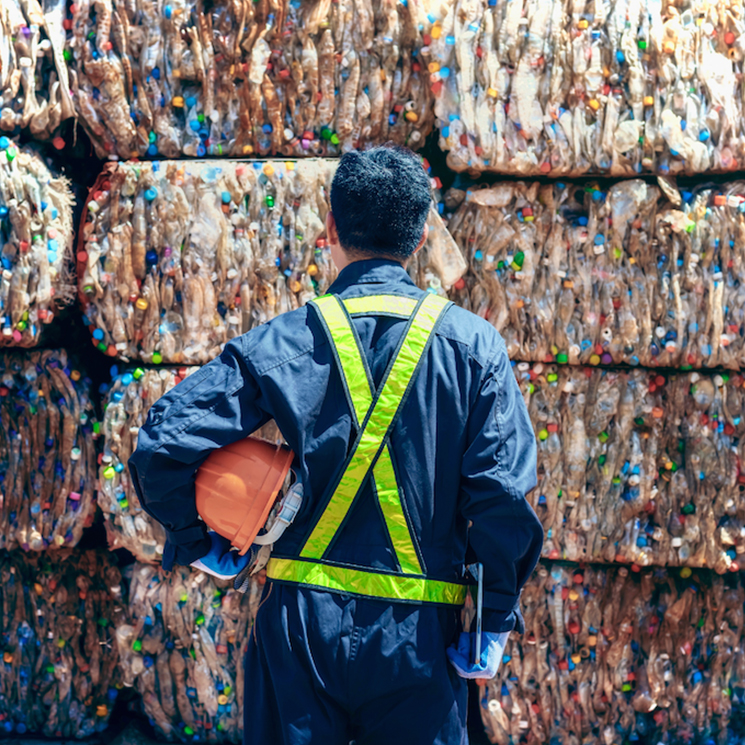
As industrial leaders, we must stay ahead of regulatory shifts that impact how we source, process and deploy recycled plastics in production. The Regulation (EU) 2025/40 (PPWR), which entered into force on 11 February 2025 and becomes fully applicable from 12 August 2026, sets out mandatory recycled content, recyclability, labelling and traceability requirements for all packaging placed on the EU market.
Key Provisions
The regulation mandates minimum recycled material percentages in packaging. For example, packaging that is contact-sensitive (such as food packaging) requires at least 30 % recycled content for single-use PET and 10 % for other plastics. For other plastic packaging the minimum is 35 %, and for single-use beverage bottles the minimum is 30 %.
From 2030 onward, all packaging placed on the market must be recyclable.
The regulatory framework also imposes obligations on traceability of materials, proof of chemical safety, absence of contaminants, and appropriate labelling and information disclosure.
What We Need to Focus On
To meet these requirements, companies must invest in systems that ensure the quality and traceability of recycled streams. This means:
Verifying that recycled input is free from contaminants and meets defined quality standards.
Establishing documentation and traceability protocols that can prove the origin, processing and characteristics of recycled feedstocks.
Ensuring compliance with chemical safety criteria i.e. verifying that additives, catalysts or production residues do not compromise safety.
Adjusting packaging design, manufacturing and supply-chain practices to align with the mandated minimum recycled content and recyclability targets.
Strategic Implications
From a strategic standpoint, compliance can become a competitive differentiator. Companies that embed recycled materials effectively and transparently will have an advantage in public tenders, growing sustainability-driven procurement, and alignment with the broader EU Green Deal objectives. Concurrently, the regulation presents an opportunity for innovation: sourcing non-contaminated virgin production scraps, developing circular-economy feedstocks, and redesigning packaging for easier reuse and recycling.
Challenges Ahead
However, this transition is not without hurdles:
The certification burden is real. We must demonstrate that recycled inputs are traceable and segregated, especially if using production scraps rather than post-consumer waste.
Increased documentation, auditing and testing will be required i.e. polymer compliance checks, migration tests, process and material audits.
Operational costs may rise initially as we adapt infrastructure, supply chains and quality control to meet the standards.
Practical Steps for Implementation
Map your current packaging portfolio, identifying which items will fall under the regulation and which will need redesign or reformulation.
Establish or upgrade traceability systems for recycled input streams i.e. from waste collection, sorting, processing to final product.
Engage with suppliers of recycled material to secure verified, low-contaminant feedstocks and request relevant certifications.
Integrate recycling and recycled-content goals into packaging design from the outset i.e. material choice, structure, ease of separation, labelling.
Monitor upcoming enforcement timelines closely and prepare for audits, certification requirements and supporting documentation to validate compliance.
Final Thoughts
Regulation (EU) 2025/40 sets a rigorous framework for the use of recycled plastics in packaging. It demands that we elevate our practices around material quality, traceability and recyclability. The challenge is significant, but so is the opportunity: to embed circular-economy principles into our operations, unlock innovation in material reuse, and meet evolving stakeholder expectations around sustainability. Acting now prepares us not only to comply, but to lead.