
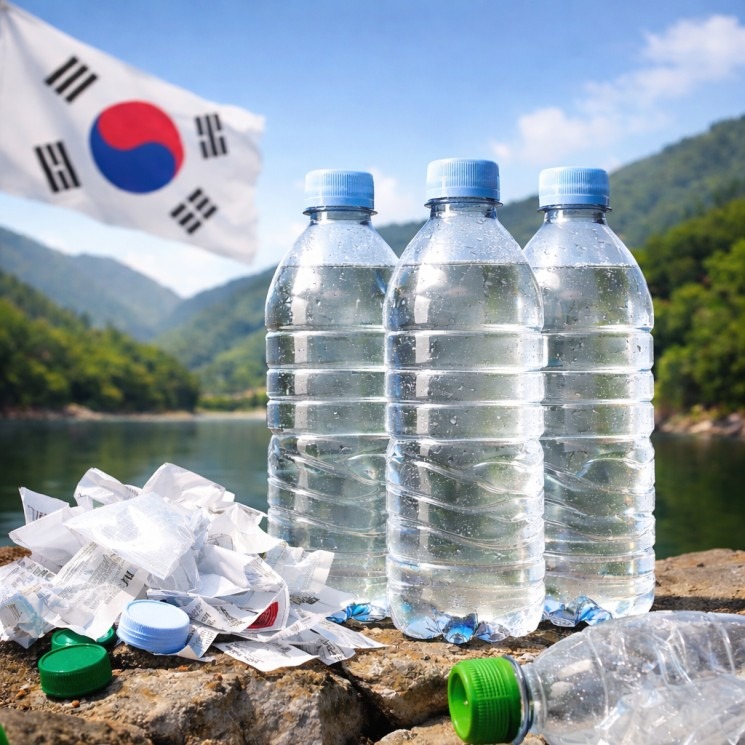
In a move that underscores South Korea’s commitment to sustainability, the Ministry of Climate, Energy and Environment has announced a significant policy change: starting on 1 January 2026, plastic labels will be banned on bottled drinking water. This regulation is set to reshape the packaging landscape for bottled water, with QR codes replacing traditional labels as a means of conveying essential product information.
Transition to QR Codes for Product Information
Under the new regulation, producers of bottled water will be required to print essential product information, including the product name, manufacturing and expiry dates, water source, and contact details, on QR codes. These codes will be placed on bottle caps, or on the outer packaging or carrying handles for bundled products. This shift aims to reduce plastic use while still providing consumers with easy access to important product details.
While the transition will apply universally from 2026, a one-year grace period will be given to products sold individually in physical stores, allowing small retailers more time to adjust to the new system. Online sales and bundled products will need to comply with the new regulations immediately. This phased approach is intended to ensure a smooth transition, especially for small businesses.
Environmental Impact and Benefits
The South Korean government estimates that this new system could help reduce plastic waste by more than 2,200 tonnes annually. With an estimated 5.2 billion bottles of drinking water consumed in South Korea each year, this shift is a significant step towards reducing plastic waste. Approximately 65% of bottled water in the country is already sold without labels, following a trial period that began in 2020. This policy forms part of South Korea’s broader environmental strategy to reduce single-use plastics and enhance recycling efforts.
Integration of Recycled PET Content
In addition to the ban on plastic labels, South Korea’s new policy also mandates the use of recycled content in colourless PET bottles. Starting in 2026, beverage producers who use more than 5,000 tonnes of colourless PET bottles annually will be required to incorporate recycled materials into their packaging. This regulation will affect major producers, including Coca-Cola Korea, Lotte Chilsung Beverage, and Jeju Samdasoo.
By 2030, the government plans to expand this mandate, requiring companies that use more than 1,000 tonnes of PET annually to incorporate at least 30% recycled content into their packaging. This move is part of South Korea’s long-term plan to enhance the circular economy by increasing the use of recycled materials in packaging and other products.
A Strategic Step Towards Sustainability
South Korea’s recent policy shift reflects the country’s broader commitment to reducing plastic waste, improving recycling infrastructure, and aligning with global environmental standards. By transitioning to QR codes and mandating the use of recycled content, South Korea is not only enhancing the sustainability of its packaging but also setting an influential example for the rest of the world. This move highlights how packaging can evolve to be both environmentally responsible and functionally accessible, driving the global shift towards sustainable solutions.
Conclusion
South Korea’s decision to ban plastic labels on bottled water and its new regulations for incorporating recycled content in packaging represent significant progress towards a more sustainable future. These initiatives are in line with a growing global trend where many countries are following suit to reduce plastic waste and improve recycling processes. By pushing for greater use of recycled materials, South Korea is reinforcing its leadership in packaging innovation and environmental responsibility. With these changes, South Korea is paving the way for others to adopt similar measures, advancing the global transition towards a more sustainable and circular economy.