
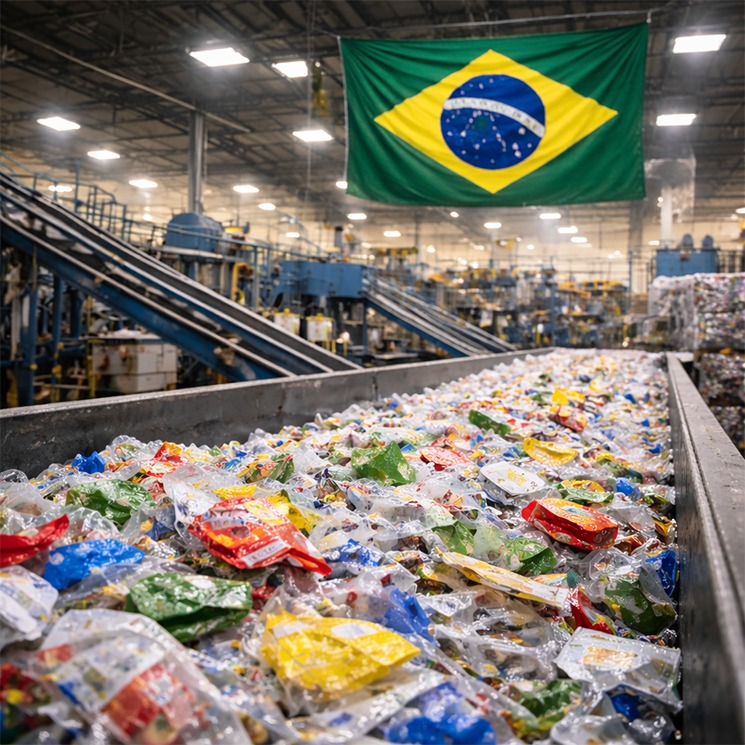
Brazil’s flexible plastic packaging industry is facing a significant challenge in reaching the country’s mandated target of 22% recycled content. As of early 2026, the sector sits at a mere 5%, which is far from the set goal and highlights the pressing need for substantial improvements in recycling infrastructure and processes. These regulations, aimed at reducing plastic waste and supporting a circular economy, are proving difficult to implement in the flexible packaging sector, which includes everyday items such as food wrappers, beverage pouches, and sachets.
The Challenge of Meeting the Mandate
Brazil’s new packaging regulations are part of a broader initiative to reduce plastic pollution and encourage more sustainable practices within the packaging industry. The government aims for 22% of packaging to be made from recycled materials, yet flexible packaging is lagging far behind in meeting this target. At present, the industry has only reached 5% recycled content, revealing the substantial gaps in the country’s recycling efforts. This disparity underlines the urgent need to strengthen the infrastructure required to manage and process these materials effectively.
Flexible plastics are known for their complex composition, which often involves multi-layered structures that are harder to recycle. These materials, commonly used in packaging for food and beverages, often end up in landfills due to limited recycling options and the technical challenges in breaking them down. The combination of inefficient collection systems, a lack of proper recycling technologies, and limited investment in infrastructure has meant that progress in this sector is slow, despite rising demand for sustainable practices.
The Roadblocks to Achieving Sustainability
While other packaging sectors have made strides toward incorporating recycled content, flexible packaging is facing more difficulties. One reason for this is its diverse material composition, which complicates the recycling process. Flexible plastic products often consist of several types of plastic layers, making it difficult to separate and process them into high-quality recycled material. Furthermore, the low collection rates for these products mean that sourcing sufficient recycled material to meet the mandated targets is an ongoing challenge.
Industry experts agree that the solution to this problem will require a concerted effort from all stakeholders in the supply chain. Packaging producers, waste management companies, and government agencies must work together to develop and expand recycling infrastructure, improve collection programmes, and introduce advanced recycling technologies that can process flexible plastics more efficiently.
A Need for Stronger Industry Collaboration
The Brazilian government’s packaging regulations are in line with the country’s commitment to reducing plastic pollution and embracing circular economy principles. However, to reach the 22% recycled content target, significant changes will be required across the entire packaging supply chain. Key areas for improvement include:
- Expanding recycling infrastructure: The current system is not equipped to process flexible plastics on a large scale. Investment in advanced recycling facilities and technology is needed to close the gap between the current recycling rates and the mandated targets.
- Increasing consumer participation: One of the most critical factors in improving recycling rates is increasing consumer involvement in waste collection programmes. Without widespread public participation, the materials necessary to meet recycled content goals will not be collected in the volumes needed.
- Developing scalable processing technologies: There is a need for scalable technologies that can efficiently process mixed flexible plastics into high-quality recycled content suitable for reuse in packaging production.
Additionally, producers must collaborate to create market incentives that encourage the use of recycled materials. Establishing these incentives can help drive demand for recycled content and promote the use of eco-friendly alternatives to virgin materials.
A Global Challenge
Brazil’s experience with recycled content mandates is not unique. Many countries around the world are grappling with similar challenges as they try to balance ambitious sustainability goals with the realities of existing recycling infrastructure. Achieving meaningful progress requires not only regulatory mandates but also a broader commitment to building the systems, technologies, and market conditions needed to process more materials effectively.
As Brazil moves forward with its packaging regulations, the flexible packaging industry will need to respond swiftly and adapt to the evolving requirements. The push for higher recycled content in packaging is an essential step in addressing plastic pollution, but the industry will need to work collaboratively and strategically to meet the target and demonstrate its long-term commitment to sustainability.
The road ahead may be challenging, but with industry-wide collaboration, innovation, and investment in infrastructure, Brazil can pave the way toward a more sustainable future for flexible packaging.