
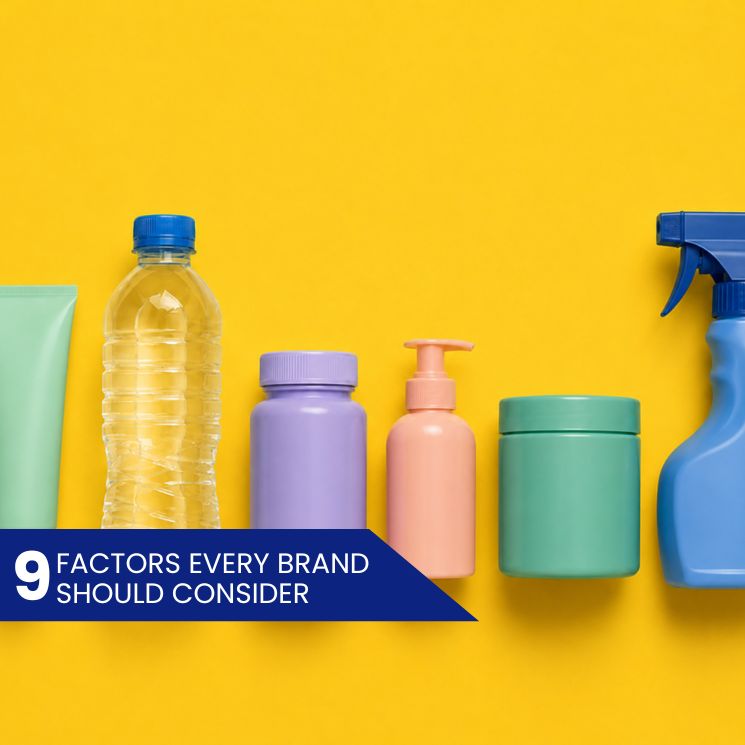
Choosing the right PET packaging is about more than selecting a bottle. Every packaging decision—from the bottle and closure to the label and material—plays a role in protecting your product, strengthening your brand, and enhancing the consumer experience.
Whether you’re launching a new product or refreshing an existing one, making the right packaging choices early can improve product performance, streamline production, and help your product stand out on the shelf.
Here are nine key factors every brand should consider when choosing PET packaging.
1. Start with Your Product
Every product has unique packaging requirements, and those requirements should guide your packaging decisions.
For example:
* Beverages require bottles that can withstand filling, transportation, and everyday handling.
* Personal care products often benefit from packaging that’s easy to grip and dispense.
* Food products require packaging that helps preserve freshness while meeting food safety standards.
Understanding your product’s characteristics is the first step toward selecting packaging that performs reliably throughout its lifecycle.
2. Choose a Bottle That Fits Your Brand
Bottle design is about more than appearance—it influences how consumers interact with your product.
When selecting a bottle, consider:
* The right capacity for your product
* A shape that’s comfortable to hold and use
* A design that stands out on retail shelves
* Efficient storage and transportation
The right bottle should strike a balance between functionality and visual appeal, helping your product leave a lasting impression.
3. Select the Right Closure & Neck Finish
The closure and neck finish work together to ensure your product is securely packaged and easy to use.
When choosing a closure system, consider:
* Product compatibility
* Leak-proof sealing
* Filling line compatibility
* Consumer convenience
* Tamper-evident or child-resistant features, where required
A well-matched bottle and closure not only protect the product but also improve the overall user experience.
4. Don’t Forget the Label
A bottle may grab attention, but it’s the label that tells your brand’s story. From product information to visual identity, the label plays a key role in influencing purchasing decisions.
Keep these points in mind:
* Available label panel area
* Label shape and size
* Branding and mandatory product information
* Compatibility with pressure-sensitive, wrap-around, or sleeve labels
Designing the bottle and label together creates a more cohesive and impactful package.
5. Think About the End Consumer
Great packaging should look good—but it should also be convenient to use.
Ask yourself:
* Is the bottle comfortable to hold?
* Is it easy to pour or dispense?
* Can consumers easily open and reclose it?
* Is it convenient to carry, store, and use?
A positive user experience can strengthen customer satisfaction and encourage repeat purchases.
6. Consider Sustainability
As sustainability becomes a priority for both brands and consumers, packaging choices matter more than ever.
Consider options such as:
* Lightweight bottle designs that use less material
* Recyclable PET packaging
* Incorporating recycled PET (rPET)
* Designs that support easier recycling
Thoughtful packaging choices can help reduce environmental impact while supporting your sustainability goals.
7. Think About Your Production Process
Your packaging should work seamlessly with your manufacturing operations.
Before finalizing a bottle, consider:
* Manual or automated filling
* Filling speed
* Hot-fill or cold-fill requirements
* Closure application and capping equipment
Choosing packaging that’s compatible with your production line can improve efficiency and reduce operational challenges.
8. Standard Bottle or Custom Design?
One of the first decisions brands face is whether to choose a standard bottle or develop a custom design.
A standard bottle can help reduce development time and tooling costs, making it ideal for faster product launches.
A custom-designed bottle offers greater flexibility to create a unique brand identity and improve shelf differentiation. While it may require additional investment and development time, it can help products stand out in a competitive market.
The right choice depends on your product, budget, timeline, and branding objectives.
9. Choose the Right Packaging Partner
Selecting the right packaging manufacturer is just as important as selecting the right packaging.
An experienced partner does more than supply bottles—they provide technical expertise, design support, and guidance throughout the development process. From selecting the right material to optimizing bottle design and ensuring consistent quality, the right packaging partner can help bring your vision to life.
Early collaboration often leads to better packaging performance, smoother production, and faster time to market.
Final Thoughts
The right PET packaging does much more than contain a product. It protects what’s inside, reflects your brand, supports efficient production, and creates a positive consumer experience.
By considering your product requirements, bottle design, closures, labeling, sustainability, production process, and long-term business goals, you can make packaging decisions that add value at every stage of the product journey.
At Chemco Group, we work closely with brands to develop PET packaging solutions that combine innovation, quality, and performance. Whether you’re looking for a standard bottle or a custom packaging solution, choosing the right packaging is the first step toward building a successful product.