
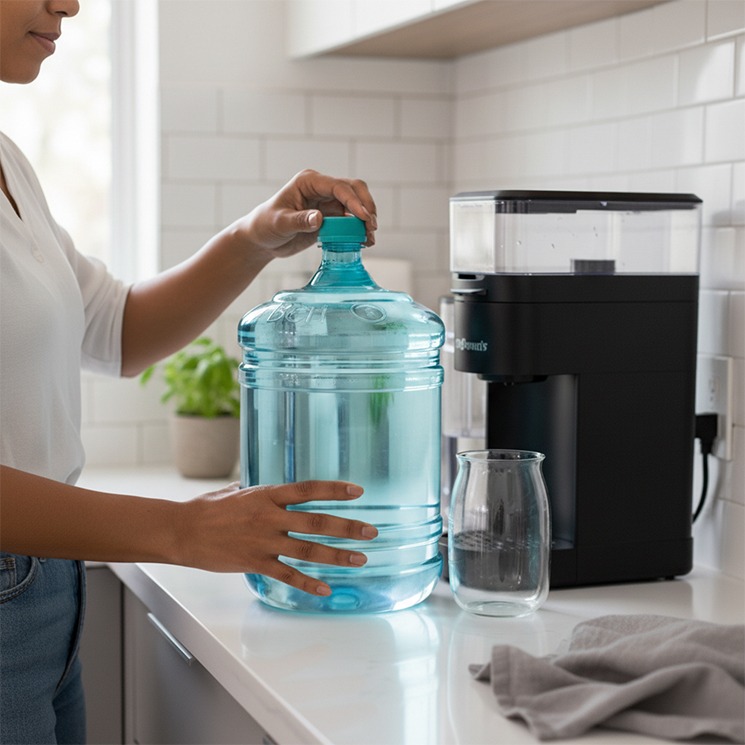
In a market shaped by hygiene expectations, delivery efficiency, and cost control, the 20 litre PET bottle continues to hold its place as one of the most dependable formats for bulk water distribution. While packaging technologies continue to evolve, this format remains widely trusted by bottled water companies, institutional buyers, offices, and households alike.
Its reliability is not the result of habit alone. The 20 litre PET bottle has stayed relevant because it performs consistently across the areas that matter most in water delivery: product safety, ease of handling, operational practicality, and consumer confidence. For businesses managing large-scale supply and regular refill cycles, these factors are critical.
A format built around real delivery needs
Water delivery is not a one-time transaction. It is a repeat-use service model that depends on consistency. The packaging must be easy to transport, simple to store, compatible with dispensing systems, and strong enough to move through filling, handling, distribution, and end use without compromising performance.
The 20 litre bottle meets these requirements well. It offers a practical volume for regular consumption while remaining manageable for commercial delivery networks. In offices, homes, schools, hospitals, and industrial settings, it provides enough capacity to reduce frequent replacements without becoming inefficient to distribute.
This balance is one of the main reasons it remains a preferred format. It supports both user convenience and delivery economics.
PET offers strength without unnecessary weight
One of the key advantages of PET, or Polyethylene Terephthalate, is its strength-to-weight ratio. A 20 litre water bottle needs to be durable enough to hold a substantial volume, yet light enough to support transport efficiency and manual handling. PET delivers that balance effectively.
Compared with heavier packaging materials, PET bottles help reduce the overall load during transportation. This can improve route efficiency and reduce handling strain across the supply chain. For delivery businesses operating at scale, these practical gains matter. Lighter bottles also support better logistics planning, especially in urban distribution environments where movement speed and storage efficiency influence service quality.
At the same time, PET bottles maintain the structural integrity required for repeated commercial use within established operating conditions. When designed and manufactured correctly, they offer dependable performance from filling line to final dispensing point.
Hygiene remains central to their value
In water delivery, trust begins with hygiene. Consumers expect clean, sealed, food-safe packaging that protects the quality of drinking water throughout storage and use. The 20 litre PET bottle remains reliable because it supports that expectation clearly.
PET is widely used in food and beverage packaging because it is suitable for safe contact applications when manufactured to the required standards. In the context of drinking water, this matters not only for compliance but also for customer assurance. The material does not introduce taste concerns when handled properly, and the bottle’s clear appearance allows for easy visual inspection before use.
This transparency has a practical advantage. Distributors, retailers, and end users can assess the bottle’s condition quickly. Any visible contamination, damage, or tampering is easier to identify. That visibility contributes to confidence across the value chain.
The bottle design also works well with tamper-evident closures and sealed cap systems, which further strengthen hygiene assurance at the point of delivery.
Well suited to dispenser-based consumption
Another reason the 20 litre PET bottle remains dependable is its compatibility with water dispensers. In both residential and commercial spaces, dispenser systems are built around this format. That compatibility supports easy placement, controlled dispensing, and consistent user experience.
For offices and institutions, this is especially important. A format that integrates smoothly with standard water dispensers reduces operational disruption and keeps consumption organised. It also limits unnecessary handling of the product once delivered, which supports hygiene and convenience.
Consumers are familiar with the format, and that familiarity works in its favour. Reliable packaging does not need to create complexity. It needs to fit into daily use without friction.
Efficient for organised delivery systems
Bulk water supply depends on predictable movement. Delivery fleets need standardised packaging that can be loaded, unloaded, stacked, and returned in a structured way. The 20 litre PET bottle supports this system well because its dimensions, handling profile, and usage pattern are already aligned with established delivery operations.
For water delivery companies, reliability is measured not only by the bottle’s physical performance but also by how well it fits into business processes. A packaging format that simplifies inventory movement, route planning, and customer replenishment has long-term value.
The 20 litre size is especially effective in subscription-style delivery models. It gives customers a useful quantity of water per unit while allowing suppliers to forecast refill needs with greater accuracy. This makes service planning more stable and helps reduce inefficiencies in distribution cycles.
Durable enough for everyday commercial handling
Water delivery is a demanding environment. Bottles are filled, capped, moved on conveyors, packed for dispatch, transported across varying distances, unloaded, positioned at customer sites, and often handled again during dispenser placement. A reliable bottle must endure these routine stresses without becoming a weak point in the process.
PET bottles are well suited to this reality when manufacturing quality is controlled. Good design, material consistency, and process discipline all contribute to performance. In this sense, reliability does not come from material choice alone. It comes from the combination of resin quality, bottle engineering, and production standards.
That is why established water brands and packaging manufacturers continue to invest in PET bottle quality. The format has proven itself, but performance still depends on execution.
Clear value for both suppliers and users
The 20 litre PET bottle continues to work because it creates practical value on both sides of the transaction.
For suppliers, it offers a packaging format that is familiar, scalable, and operationally efficient. It supports structured delivery, reliable filling, and customer-ready presentation. It also works within established infrastructure, which reduces the need for major system changes.
For users, the benefits are equally direct. The bottle is convenient, easy to recognise, simple to install on compatible dispensers, and appropriate for group consumption. In households and workplaces, that convenience matters. End users are not evaluating packaging as a technical product. They are judging whether it is clean, dependable, and easy to use. The 20 litre PET bottle performs well on all three counts.
A practical fit for refill and return ecosystems
Water delivery systems often rely on repeat circulation and organised returns. In these models, packaging must support a disciplined operational loop. The 20 litre format fits naturally into this structure because it has long been integrated into refill-based supply chains.
Its standardised use makes collection and redistribution easier to manage. Delivery teams are trained around it, storage systems are designed for it, and customers understand how it fits into their routine consumption cycle. That consistency reduces friction throughout the process.
As supply chains continue to focus on efficiency and responsible material use, formats that already align with practical reuse and return systems will remain important. The continued relevance of the 20 litre PET bottle reflects this operational advantage.
Recyclability supports its long-term relevance
Sustainability is now part of every serious packaging discussion, and rightly so. In that context, PET remains significant because it is a recyclable material with an established recovery pathway in many markets. While collection and recycling systems vary by region, PET’s recyclability strengthens its long-term packaging relevance.
For businesses, this matters from both a compliance and reputation standpoint. Customers increasingly expect packaging decisions to reflect environmental responsibility. A format that combines delivery efficiency with recyclable material value is better placed to remain viable over time.
This does not mean the material alone solves the sustainability question. Collection systems, waste management infrastructure, and responsible disposal behaviour all play a role. Still, the recyclability of PET is an important part of why the 20 litre bottle continues to be viewed as a sound packaging choice.
Reliability comes from performance, not familiarity alone
It is easy to assume that older or widely used packaging formats survive simply because the market is used to them. In reality, the 20 litre PET bottle remains strong because it continues to meet the functional demands of modern water delivery.
It protects product quality. It supports hygienic distribution. It works efficiently across handling and transport. It fits existing dispenser systems. It offers practical value to suppliers and end users. These are not legacy advantages. They are current operational strengths.
As delivery models become more service-oriented and consumer expectations become more quality-conscious, the formats that endure will be the ones that continue to perform without creating unnecessary complexity. The 20 litre PET bottle has done exactly that.
Conclusion
The continued use of 20 litre PET bottles in water delivery is grounded in performance, practicality, and trust. It is a format that has adapted well to real market needs, combining structural reliability with user convenience and supply chain efficiency.
For water brands, distributors, and institutional buyers, reliability is never an abstract feature. It is reflected in every successful fill, every secure delivery, and every safe dispense. The 20 litre PET bottle continues to support that standard, which is why it remains one of the most dependable choices in the water delivery industry.