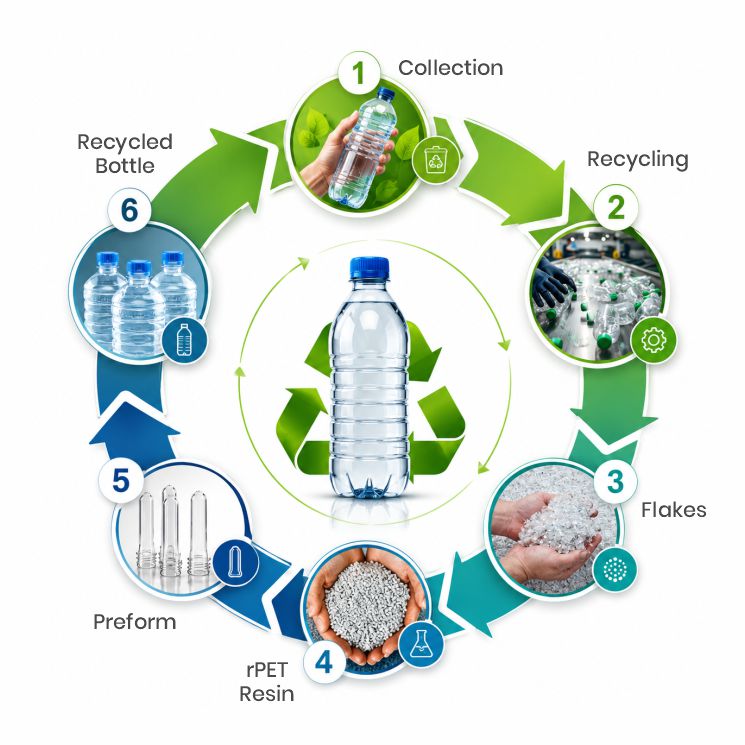
The Journey of a PET Bottle: How Circular Packaging Gives Plastic a Second Life

Have you ever wondered what happens to a PET bottle after you’ve finished using it?

For many, it’s simply thrown into a recycling bin and forgotten. But that’s only the beginning of its journey.

When collected and recycled correctly, a PET bottle doesn’t become waste—it becomes a valuable resource that can be transformed into new products, reducing the need for virgin plastic and supporting a more circular economy.

As conversations around sustainability continue to grow, understanding the lifecycle of packaging has never been more important.

Why PET Stands Out

PET (Polyethylene Terephthalate) is one of the world’s most widely used packaging materials—and for good reason. It is lightweight, durable, food-safe, and highly recyclable.

Unlike many materials that lose quality after recycling, PET can be processed into recycled PET (rPET) and used in a variety of applications, giving the material multiple lives instead of just one.

This ability to stay in circulation makes PET an important part of the transition towards more sustainable packaging.

The Journey of a PET Bottle

A PET bottle’s lifecycle doesn’t end after its first use. With the right collection and recycling systems in place, it can continue creating value.

Step 1: Collection

Once used, PET bottles are collected through waste collection systems, recycling initiatives, and collection networks.

Step 2: Sorting & Recycling

The collected bottles are sorted, cleaned, and processed into PET flakes or pellets. These recycled materials become the raw material for manufacturing new products.

Step 3: A New Beginning

Recycled PET can be transformed into a wide range of applications, including:

  • New PET bottles
  • Food-grade packaging
  • Textile fibres
  • Industrial packaging
  • Reusable transport and packaging solutions

Instead of ending up in landfills, PET continues its journey in a new form.

Circular Packaging Starts with Better Design

Recycling is only one part of the equation.

Packaging designed with recyclability in mind makes it easier to recover valuable materials and return them to the manufacturing cycle. Choosing recyclable materials, reducing unnecessary material combinations, and increasing the use of recycled content are all important steps towards building a circular packaging ecosystem.

When products are designed for circularity, they create value long after their first use.

India’s Growing PET Recycling Ecosystem

India has emerged as one of the global leaders in PET recycling, supported by an extensive network of collectors, recyclers, and manufacturers.

Today, an estimated 9 out of every 10 PET bottles in India are recycled, demonstrating what’s possible when materials are valued and effective collection systems are in place.

This progress highlights an important principle: when materials have value, they are more likely to be collected, recycled, and reintroduced into the economy instead of becoming waste.

Every Bottle Has a Future

The journey of a PET bottle doesn’t have to end after a single use.

With thoughtful design, efficient collection systems, and advanced recycling technologies, PET can remain in circulation for years—reducing waste, conserving resources, and supporting a more circular economy.

As sustainability becomes a shared responsibility across manufacturers, brands, recyclers, policymakers, and consumers, one thing is becoming increasingly clear:

The future of packaging isn’t about using less plastic. It’s about using plastic more responsibly.

Every bottle collected is an opportunity to create something new.

Every recycled bottle is a step towards a more circular future.

Because in a circular economy, waste isn’t the end of the story—it’s the beginning of the next one.
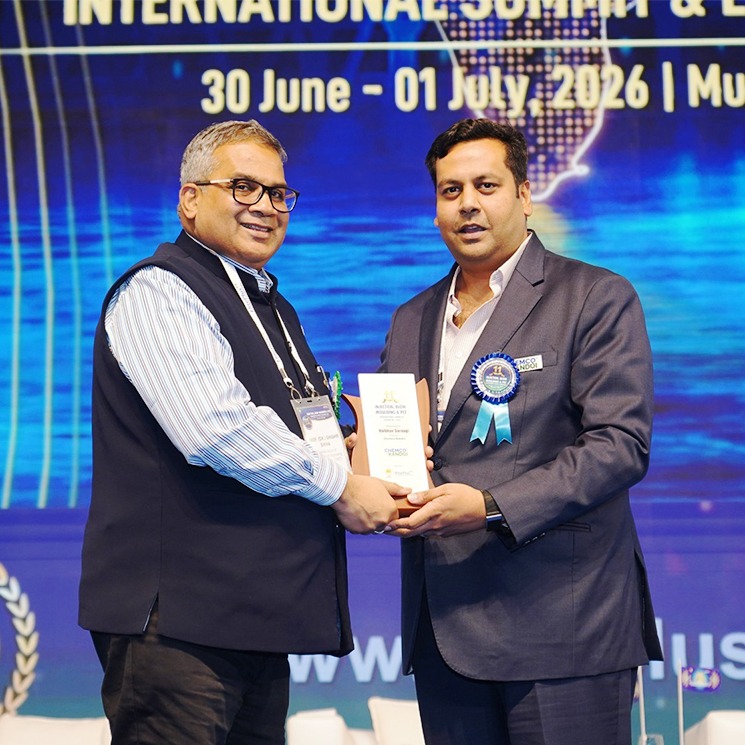
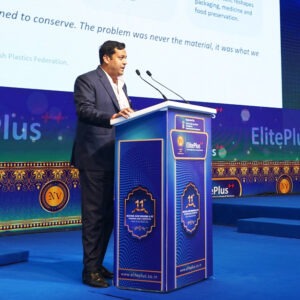
Elite++ 2026: Conversations Shaping the Future of Packaging

The 11th Injection, Blow Moulding & PET International Summit & Exhibition (Elite++ 2026) brought together some of the brightest minds from the plastics and packaging industries. From manufacturers and brand owners to recyclers, policymakers and technology providers, the summit served as a platform to discuss the challenges and opportunities shaping the future of packaging.

This year’s conversations revolved around themes that are redefining the industry innovation in rigid PET and rPET packaging, evolving consumer expectations, sustainability, Extended Producer Responsibility (EPR), circular economy, and the growing role of recycling technologies.

While each session offered unique perspectives, one message consistently stood out:

The future of packaging lies not in replacing plastic but in creating systems where it never becomes waste.

Innovation Must Go Hand in Hand with Responsibility

Packaging today is expected to do much more than protect a product. It must improve efficiency, reduce environmental impact, meet evolving regulations, and align with growing consumer expectations around sustainability.

As businesses adapt to these changing demands, innovation is no longer just about developing new materials; it’s about designing smarter, more circular solutions.

This shift was evident throughout Elite++ 2026, where discussions focused on how the industry can move from a linear model of “make, use and dispose” to one where materials remain in use for as long as possible.

A Different Perspective on Plastic

During the summit, Vaibhav Sarogi, Promoter of Chemco Group, shared a thought-provoking perspective that challenged one of the most common misconceptions surrounding plastics.

“Plastic is not the problem. Waste is.”
Plastic has transformed industries by preserving food, protecting medicines, reducing transportation emissions through lightweight packaging, and making essential products more accessible.

The challenge begins when valuable materials are discarded instead of being collected, recycled, and brought back into the value chain.

Changing this mindset—from viewing plastic as waste to recognising it as a valuable resource—is essential for building a truly circular economy.

Why PET Continues to Lead the Circular Economy

Among all packaging materials, PET has emerged as one of the strongest examples of circularity.

Lightweight, durable, and highly recyclable, PET can be recycled multiple times into new bottles, fibres, textiles, and industrial packaging without losing its value.

India has also built one of the world’s most successful PET recycling ecosystems, with 9 out of every 10 PET bottles being recycled through an extensive collection and recycling network.

This demonstrates an important principle: when materials have value, they are recovered, recycled, and reintroduced into the economy instead of becoming waste.

Turning Circular Thinking into Action

At Chemco, these conversations reinforce the direction we’ve been working towards for decades.

Our focus has always been on developing packaging solutions that combine performance with sustainability. Today, that commitment extends beyond manufacturing PET packaging to enabling circular solutions through recycled materials and responsible product design.

With our expansion into food-grade recycled PET (rPET) and the launch of Chemco Kandoi, we are helping create a closed-loop ecosystem where PET bottles can be recycled back into bottles or transformed into high-performance rPET FIBC bags, extending the life of the material while supporting customers in achieving their sustainability and EPR goals.

It’s an approach that reflects our belief that innovation should not only solve today’s packaging needs but also contribute to a more resource-efficient future.

Looking Ahead

Elite++ 2026 reinforced that the future of packaging will be shaped by collaboration across the value chain.

Manufacturers, recyclers, brand owners, technology providers, policymakers, and consumers all have an important role to play in advancing circularity.

As the industry continues to evolve, success will depend not only on innovation but also on creating systems that keep materials in circulation, reduce waste, and maximise the value of resources.

At Chemco, we remain committed to driving this transition by delivering packaging solutions that support both business growth and environmental responsibility.

Because the future of packaging isn’t just about what we make.

It’s about what we choose to do with it after it’s used.

Let’s Build the Future of Circular Packaging Together

Whether you’re looking to incorporate recycled content, meet evolving EPR requirements, or explore innovative PET and rPET packaging solutions, our team is here to help.