
Sustainability Is Reshaping Packaging
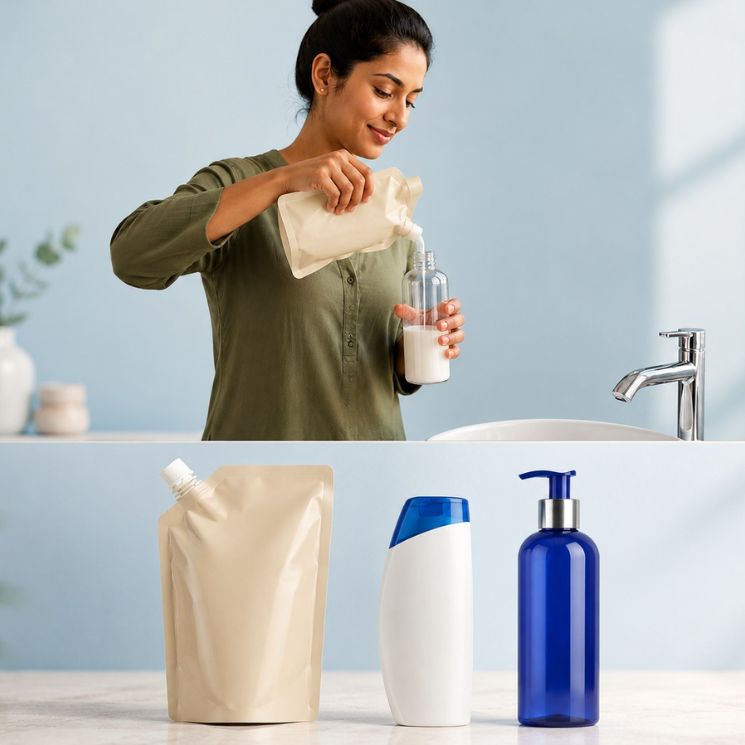
Sustainability is reshaping how brands think about packaging. While recyclable materials and recycled content often dominate the conversation, refill and reuse models are gaining renewed attention as companies look for ways to reduce packaging waste and support circular economy goals.
From detergent refill pouches and sauce refill packs to returnable beverage bottles, brands across industries are exploring packaging systems that extend the life of packaging rather than replacing it after a single use.
But can refill and reuse models move beyond niche applications and become a scalable solution for mainstream markets?
Why Refill and Reuse Are Back in Focus
The idea isn’t new. Returnable glass bottles, reusable transport packaging, and refill packs have existed for decades.
What has changed is the growing focus on resource efficiency, packaging reduction, and circular economy initiatives. Businesses are increasingly evaluating how packaging can remain in use for longer while maintaining product performance, consumer convenience, and operational efficiency.
Refill and reuse systems offer one pathway toward achieving these goals by reducing the need for new packaging materials and maximizing the value of existing packaging assets.
Where Refill Models Are Already Working
Several product categories have successfully adopted refill-oriented packaging formats.
Home Care Products
Products such as liquid detergents, fabric conditioners, dishwashing liquids, and floor cleaners are commonly available in refill pouches. These formats allow consumers to reuse existing bottles while reducing the amount of packaging material required for repeat purchases.
Personal Care Products
The personal care industry has also embraced refill solutions. Brands have introduced refill formats for selected products, including hand wash, body wash, shampoo, and skincare applications.
Food & Condiments
Products such as ketchup, mayonnaise, sauces, and edible oils are increasingly available in flexible refill packs. In India, brands like Veeba have popularized pouch formats that allow consumers to replenish existing containers while using less packaging material compared to purchasing a new rigid bottle each time.
These examples demonstrate how refill formats can be integrated into everyday consumer purchasing habits without requiring significant changes in product usage.
The Power of Reuse Systems
While refill packs focus on retaining the primary container, reuse systems are designed around packaging that can be collected, cleaned, and used again.
One of the most established examples comes from the beverage industry. Returnable glass and PET bottle systems operate across several markets, supported by collection and return infrastructure. These bottles are collected, inspected, cleaned, refilled, and returned to circulation multiple times before being recycled.
Reusable transport packaging also plays an important role across industrial supply chains. Crates, pallets, drums, and Intermediate Bulk Containers (IBCs) are routinely reused because they offer operational and economic advantages when managed effectively.
These examples highlight an important reality: reuse systems can achieve scale when supported by the right infrastructure, logistics, and stakeholder participation.
What Is Preventing Wider Adoption?
Despite their potential, refill and reuse models are not suitable for every product category or market.
Consumer Convenience
Refill and reuse programs often depend on consumer participation. If the process is perceived as inconvenient, adoption rates may be limited.
Reverse Logistics
Reuse systems require packaging to be collected, transported, inspected, and reintroduced into circulation. Building and maintaining this infrastructure can be challenging.
Product Requirements
Certain products have specific hygiene, safety, shelf-life, or regulatory requirements that may limit the practicality of refill or reuse systems.
Economic Viability
Businesses must balance sustainability goals with operational realities. The long-term success of refill and reuse systems depends on whether they can deliver environmental benefits while remaining commercially viable.
Can Refill and Reuse Scale?
The answer depends largely on the product category, geography, and supply chain structure.
Refill formats have already achieved significant adoption in home care, personal care, and selected food categories because they fit naturally into existing consumer behavior and retail environments.
Reuse systems have also demonstrated success in sectors such as beverages and industrial packaging, where collection and return infrastructure can be effectively managed.
However, refill and reuse are unlikely to be a universal solution for every packaging application. Different products will require different approaches based on performance requirements, consumer expectations, logistics, and sustainability objectives.
Rather than replacing all other packaging formats, refill and reuse models are likely to become part of a broader packaging strategy that also includes recyclability, recycled content integration, lightweighting, and material innovation.
Looking Beyond a Single Solution
The packaging industry’s sustainability journey is not about finding one perfect solution.
Refill systems, reusable packaging, recyclable materials, and recycled-content packaging each address different challenges and opportunities. The most effective strategy often involves selecting the right packaging solution for the specific product, market, and supply chain.
As brands continue to evaluate ways to reduce environmental impact, refill and reuse models will remain an important part of the broader conversation around circular packaging systems.
Conclusion
Refill and reuse models are no longer limited to niche sustainability initiatives. From detergent refill pouches and sauce refills to returnable beverage bottles and reusable industrial packaging, businesses are exploring practical ways to keep packaging in use for longer and reduce material consumption.
While challenges remain, growing adoption across multiple industries suggests that refill and reuse can play a meaningful role in the future of packaging when supported by thoughtful design, operational efficiency, and consumer engagement.
The future of packaging is unlikely to be defined by a single approach. Instead, it will be shaped by a combination of refill, reuse, recycling, and innovation working together to support more sustainable packaging systems.
Exploring Circular Packaging Solutions?
As sustainability goals evolve, businesses need packaging solutions that balance performance, operational efficiency, recyclability, and changing consumer expectations.
At Chemco, we work with brands across food, beverage, personal care, home care, and industrial sectors to develop packaging solutions that support both product performance and circular economy objectives.
Whether you’re evaluating refill packs, reusable packaging systems, lightweight packaging designs, or recyclable packaging formats, our team can help identify the right solution for your application.
Connect with Chemco’s packaging experts to discuss your next packaging innovation.