PET Basics: What Is Intrinsic Viscosity (IV)?

The world of PET packaging is full of technical terms that can seem complex at first. Yet, understanding these concepts can help brands make informed packaging decisions and appreciate the science behind every bottle and preform.

That’s why we’re introducing PET Basics—Chemco’s educational blog series that simplifies the science behind PET packaging. Through this series, we’ll break down key concepts, industry terminology, and manufacturing processes into easy-to-understand insights for brand owners, packaging professionals, students, and anyone curious about the world of plastics.

Let’s begin with one of the most important properties of PET—Intrinsic Viscosity (IV).

What Is Intrinsic Viscosity (IV)?

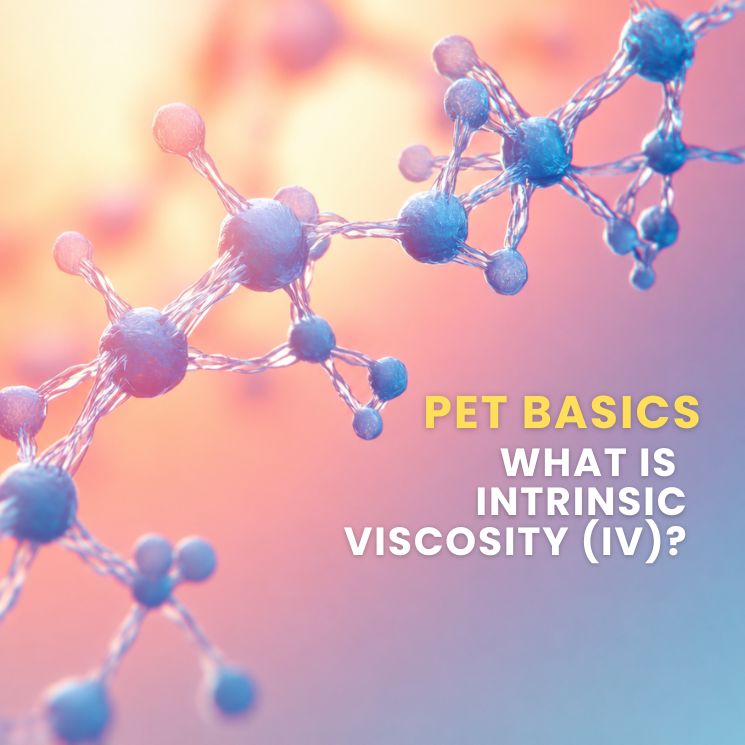
Intrinsic Viscosity (IV) is a measure of the average molecular weight of PET resin. In simple terms, it indicates the length of the polymer chains that make up the material.

Think of it like a chain:

1. Longer polymer chains result in a stronger and more durable material.
2. Shorter polymer chains can reduce the strength and performance of the finished product.

This is why IV is an important parameter when selecting PET resin for different packaging applications.

Why Does IV Matter?

Not all PET packaging is designed for the same purpose. Different products require different performance characteristics.

For example:

* A water bottle needs to be lightweight while maintaining durability.
* A carbonated soft drink bottle must withstand the pressure created by carbonation.
* A hot-fill bottle should retain its shape when filled at higher temperatures.

The right Intrinsic Viscosity helps manufacturers produce packaging that meets these specific performance requirements.

Application Typical IV Range (dL/g)
Water Bottles 0.72 – 0.80
Carbonated Soft Drink (CSD) Bottles 0.82 – 0.86
Hot-Fill Bottles 0.76 – 0.80

These values may vary depending on the product, bottle design, and processing requirements, but they provide a useful reference for common PET applications.

What Can Reduce IV?

Maintaining the desired IV requires careful control during manufacturing. Several factors can reduce Intrinsic Viscosity, including:

  • Moisture in PET resin (hydrolysis)
  • Excessive barrel temperatures during processing
  • Long residence time in the moulding machine
  • Repeated reprocessing of PET material without proper process control

A reduction in IV can affect the strength, consistency, and overall quality of PET preforms and bottles.

How Is IV Maintained?

Producing high-quality PET packaging isn’t just about choosing the right resin—it’s also about processing it correctly.

Manufacturers maintain IV by:

* Properly drying PET resin before processing
* Maintaining optimal processing temperatures
* Minimizing unnecessary residence time
* Carefully monitoring the use of recycled PET (rPET)

These practices help preserve the molecular structure of PET and ensure consistent product quality.

Why Should Brand Owners Care?

While Intrinsic Viscosity is a technical property, its impact is practical.

Choosing PET packaging with the right IV helps ensure:

* Reliable bottle performance during filling and transportation
* Better durability and product protection
* Consistent quality across production batches
* Packaging designed to suit its intended application

Working with an experienced packaging manufacturer means these critical material properties are carefully considered from the very beginning.

The Chemco Perspective

At Chemco Group, quality starts long before a bottle reaches the production line. It begins with selecting the right materials, maintaining strict process controls, and ensuring every PET preform and bottle is manufactured to deliver consistent performance, reliability, and sustainability.

Understanding concepts like Intrinsic Viscosity helps brands make more informed packaging decisions, and that’s exactly what PET Basics is all about.

Stay tuned as we continue this series, exploring more topics that simplify the science behind PET packaging—one concept at a time.

What Does Circular Packaging Really Mean? A Simple Guide to the Future of Sustainable Packaging

Sustainability has become one of the most talked-about topics in the packaging industry. Along with it, a new term has gained significant attention—circular packaging.

But what does it actually mean?

Is it simply about using recycled materials? Is it about eliminating plastic? Or is there more to it?

The answer lies in how packaging is designed, used, collected, and reused. Circular packaging isn’t just a trend—it’s a smarter way of thinking about resources.

From a Linear to a Circular Economy

For decades, most packaging followed a linear model:

Make → Use → Dispose

Once a product was used, its packaging often ended up in a landfill or as litter.

A circular economy takes a different approach.

Instead of becoming waste after one use, materials are designed to stay in circulation through reuse, recycling, and remanufacturing.

The goal is simple: keep valuable materials in use for as long as possible.

So, What Is Circular Packaging?

Circular packaging is packaging that is designed to remain within the economy rather than becoming waste.

This can be achieved by:

  • Designing packaging that can be easily recycled
  • Increasing the use of recycled content
  • Reducing unnecessary material combinations
  • Supporting efficient collection and recycling systems
  • Extending the life of packaging materials through multiple recycling cycles

It’s about thinking beyond a product’s first use and considering what happens next.

Why It Matters

Packaging plays a vital role in protecting products, reducing food waste, and improving transportation efficiency.

However, when packaging isn’t collected or recycled, valuable materials are lost.

Circular packaging helps address this challenge by reducing the demand for virgin raw materials, conserving natural resources, and lowering the environmental impact of packaging over time.

It also supports businesses in meeting evolving sustainability goals and regulatory requirements.

The Role of PET in Circular Packaging

PET has become one of the strongest examples of a circular packaging material.

Its ability to be collected, recycled, and transformed into new products makes it an important part of today’s recycling ecosystem.

A used PET bottle can become another bottle, textile fibres, industrial packaging, or many other products—keeping the material in circulation instead of allowing it to become waste.

When supported by effective collection and recycling systems, PET demonstrates how packaging can successfully move from a linear to a circular model.

Circularity Is a Shared Responsibility

Building a circular economy isn’t the responsibility of one stakeholder alone.

Manufacturers need to design recyclable packaging.

Brands need to adopt sustainable packaging solutions.

Waste collection and recycling systems must continue to improve.

Consumers also play a crucial role by disposing of packaging responsibly and supporting recycling efforts.

When each part of the value chain works together, circular packaging becomes achievable.

Looking Ahead

As sustainability expectations continue to grow, circular packaging is becoming an essential part of the future of packaging.

It’s no longer just about what packaging is made from.

It’s about ensuring materials continue to create value long after they’ve served their first purpose.

Because the goal isn’t simply to reduce waste.

It’s to design a future where waste is designed out of the system altogether.

Beyond Manufacturing: What Does a 360° Packaging Partner Really Mean?

In today’s competitive marketplace, packaging is no longer just about manufacturing bottles, containers, or closures. It has become an integral part of product development, supply chain efficiency, brand identity, regulatory compliance, and sustainability.

As consumer expectations evolve and businesses face increasing pressure to innovate, the role of a packaging supplier has also transformed.

Today’s brands don’t simply need a manufacturer.

They need a packaging partner.

Packaging Is More Than a Product

For many businesses, packaging is often viewed as the final step before a product reaches the market. In reality, successful packaging decisions begin much earlier.

From selecting the right material and designing functional packaging to ensuring compatibility with filling lines and transportation requirements, every stage influences product performance and customer experience.

A well-designed package doesn’t just protect what’s inside—it improves operational efficiency, supports sustainability goals, and strengthens a brand’s presence in the market.

This is why businesses are increasingly looking beyond manufacturing and seeking partners who can contribute throughout the packaging journey.

What Does a 360° Packaging Partner Do?

A 360° packaging partner supports businesses from concept to commercialisation, helping simplify what is often a complex development process.

Rather than supplying a finished product alone, they bring together expertise across multiple stages of packaging development.

This may include:

  • Understanding product and market requirements
  • Selecting the most suitable packaging material
  • Packaging design and engineering
  • Prototype development
  • Tool and mould development
  • Manufacturing and quality assurance
  • Decoration and value-added solutions
  • Supply chain and logistics support
  • Sustainability and circular packaging guidance

By integrating these capabilities, businesses can reduce development timelines, improve consistency, and make better-informed packaging decisions.

Why Early Collaboration Matters

Many packaging challenges arise long before production begins.

Material compatibility, filling line performance, stackability, transportation conditions, and regulatory requirements all need to be considered during the design phase—not after production has started.

When packaging experts are involved early, potential issues can often be identified and resolved before they become costly challenges.

This collaborative approach not only improves efficiency but also helps accelerate product launches.

Innovation Goes Beyond New Materials

Innovation in packaging is often associated with new materials or technologies.

However, some of the most meaningful improvements come from refining existing processes.

Optimised bottle designs, lightweight packaging, improved manufacturing efficiency, enhanced product protection, and designing for recyclability all contribute to better packaging performance.

True innovation is about creating solutions that balance functionality, efficiency, sustainability, and commercial viability.

Building Long-Term Value

Packaging decisions influence far more than manufacturing costs.

They affect transportation efficiency, warehouse optimisation, product safety, consumer experience, regulatory compliance, and environmental impact.

Businesses that view packaging strategically are better positioned to respond to changing market expectations while building more resilient supply chains.

Choosing the right packaging partner is therefore not simply about finding a supplier—it’s about building a long-term relationship that supports innovation and business growth.

Looking Ahead

As the packaging industry continues to evolve, collaboration will become increasingly important.

Brands are seeking partners who understand not only how to manufacture packaging, but also how to solve challenges across the entire product lifecycle.

Because great packaging is never created in isolation.

It is built through expertise, collaboration, and a shared commitment to delivering solutions that perform today while preparing for the demands of tomorrow.

Stretch Film vs. Shrink Film: Understanding the Key Differences

In industrial and commercial packaging, selecting the right protective film is essential for ensuring product integrity, operational efficiency, and cost optimisation. Two of the most commonly used packaging materials—stretch film and shrink film—are often mistaken for one another due to their similar appearance.

However, despite both being polymer-based packaging films, they are designed for entirely different applications.

Understanding the differences between stretch film and shrink film helps manufacturers, distributors, and brand owners choose the most suitable solution based on their packaging requirements.

What is Stretch Film?

Stretch film is a highly stretchable plastic film used primarily for securing and stabilising products during storage and transportation.

The film is applied by stretching it around products or palletised loads, allowing its elastic recovery to create a tight holding force. This eliminates the need for adhesives or heat during application.

Stretch film is widely used across logistics, warehousing, manufacturing, and distribution operations to minimise load movement and improve transport stability.

Typical Applications

  • Pallet wrapping
  • Warehouse storage
  • Distribution and logistics
  • Unitising multiple cartons
  • Protection against dust and moisture during transit

What is Shrink Film?

Shrink film is a polymer film that contracts tightly around a product when exposed to controlled heat.

After the product is wrapped, it passes through a heat tunnel or is treated with a heat gun, causing the film to shrink uniformly around the product.

Shrink film is primarily used for retail and consumer packaging where product presentation, tamper evidence, and protection are equally important.

Typical Applications

  • Beverage multipacks
  • Food and bakery products
  • Personal care and cosmetic products
  • Consumer goods
  • Electronics
  • Pharmaceutical packaging

Stretch Film vs. Shrink Film: A Comparison

Parameter Stretch Film Shrink Film
Application Method Applied by stretching around the load Applied loosely and shrunk using heat
Heat Requirement Not required Required
Primary Purpose Load stabilisation and transport protection Product containment and retail presentation
Typical Use Pallets, cartons and industrial loads Individual products and multipacks
Tamper Evidence Limited Excellent
Packaging Appearance Secures the load without conforming tightly to product shape Conforms closely to the product for a clean finish

Packaging Appearance Secures the load without conforming tightly to product shape Conforms closely to the product for a clean finish

Which Packaging Solution is Right for Your Business?

The choice between stretch film and shrink film depends on the intended application rather than the material itself.

If the objective is to secure pallet loads, improve transport stability, and protect goods throughout the supply chain, stretch film is the preferred solution.

If the requirement is to provide a neat retail appearance, product containment, and tamper-evident packaging, shrink film is the more suitable option.

In many industries, both films complement one another. Products may first be shrink wrapped for retail presentation before cartons are palletised and secured using stretch film for transportation.

Making the Right Packaging Decision

Choosing the appropriate packaging solution involves more than comparing materials. Factors such as product dimensions, load stability, transportation conditions, automation requirements, sustainability objectives, and overall packaging efficiency should all be considered.

As packaging continues to evolve, businesses are increasingly looking for solutions that not only protect products but also improve operational performance and optimise material usage.

Understanding the distinct roles of stretch film and shrink film enables businesses to make informed packaging decisions that support both product protection and supply chain efficiency.

Final Thought

Although stretch film and shrink film may appear similar, they are designed to solve different packaging challenges.

Selecting the right film ensures better product protection, improved handling efficiency, and enhanced packaging performance throughout the product’s journey—from production to the end user.

The Journey of a PET Bottle: How Circular Packaging Gives Plastic a Second Life

Have you ever wondered what happens to a PET bottle after you’ve finished using it?

For many, it’s simply thrown into a recycling bin and forgotten. But that’s only the beginning of its journey.

When collected and recycled correctly, a PET bottle doesn’t become waste—it becomes a valuable resource that can be transformed into new products, reducing the need for virgin plastic and supporting a more circular economy.

As conversations around sustainability continue to grow, understanding the lifecycle of packaging has never been more important.

Why PET Stands Out

PET (Polyethylene Terephthalate) is one of the world’s most widely used packaging materials—and for good reason. It is lightweight, durable, food-safe, and highly recyclable.

Unlike many materials that lose quality after recycling, PET can be processed into recycled PET (rPET) and used in a variety of applications, giving the material multiple lives instead of just one.

This ability to stay in circulation makes PET an important part of the transition towards more sustainable packaging.

The Journey of a PET Bottle

A PET bottle’s lifecycle doesn’t end after its first use. With the right collection and recycling systems in place, it can continue creating value.

Step 1: Collection

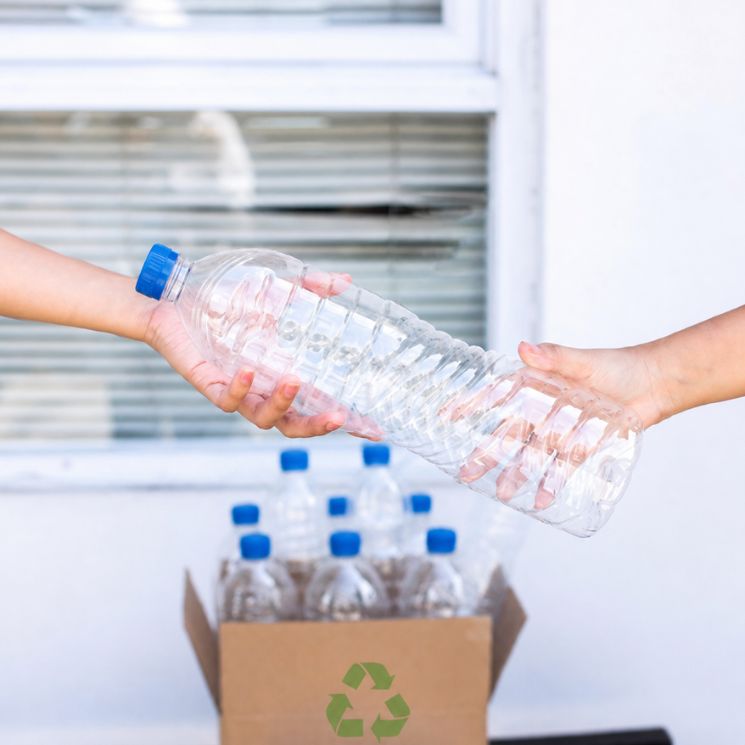
Once used, PET bottles are collected through waste collection systems, recycling initiatives, and collection networks.

Step 2: Sorting & Recycling

The collected bottles are sorted, cleaned, and processed into PET flakes or pellets. These recycled materials become the raw material for manufacturing new products.

Step 3: A New Beginning

Recycled PET can be transformed into a wide range of applications, including:

  • New PET bottles
  • Food-grade packaging
  • Textile fibres
  • Industrial packaging
  • Reusable transport and packaging solutions

Instead of ending up in landfills, PET continues its journey in a new form.

Circular Packaging Starts with Better Design

Recycling is only one part of the equation.

Packaging designed with recyclability in mind makes it easier to recover valuable materials and return them to the manufacturing cycle. Choosing recyclable materials, reducing unnecessary material combinations, and increasing the use of recycled content are all important steps towards building a circular packaging ecosystem.

When products are designed for circularity, they create value long after their first use.

India’s Growing PET Recycling Ecosystem

India has emerged as one of the global leaders in PET recycling, supported by an extensive network of collectors, recyclers, and manufacturers.

Today, an estimated 9 out of every 10 PET bottles in India are recycled, demonstrating what’s possible when materials are valued and effective collection systems are in place.

This progress highlights an important principle: when materials have value, they are more likely to be collected, recycled, and reintroduced into the economy instead of becoming waste.

Every Bottle Has a Future

The journey of a PET bottle doesn’t have to end after a single use.

With thoughtful design, efficient collection systems, and advanced recycling technologies, PET can remain in circulation for years—reducing waste, conserving resources, and supporting a more circular economy.

As sustainability becomes a shared responsibility across manufacturers, brands, recyclers, policymakers, and consumers, one thing is becoming increasingly clear:

The future of packaging isn’t about using less plastic. It’s about using plastic more responsibly.

Every bottle collected is an opportunity to create something new.

Every recycled bottle is a step towards a more circular future.

Because in a circular economy, waste isn’t the end of the story—it’s the beginning of the next one.