The Story Behind Chemco’s Loofahs: Empowering Women Through Opportunity

A loofah is something most of us use every day without giving it a second thought. We see it as a personal care essential—a product designed to create a rich lather and enhance our bathing experience.

But at Chemco Group, every loofah tells a much deeper story.

It’s a story of opportunity, dignity, and empowerment. A story that proves meaningful employment doesn’t always require people to leave their homes. Sometimes, the opportunity can come to them.

This initiative was envisioned by Mr. Vaibhav Saraogi, Managing Director of Chemco Group, with a simple yet powerful belief: businesses can create value not only through the products they manufacture, but also through the lives they help transform.

A Vision Beyond Manufacturing

Across many rural communities in India, women play a central role in managing their households. Alongside caring for children, supporting elderly family members, and managing day-to-day responsibilities, many also wish to contribute financially to their families.

However, conventional employment is not always accessible. Travelling long distances, fixed working hours, and family responsibilities can make it difficult for many women to work outside their homes.

Rather than expecting women to come to the workplace, Chemco adopted a different approach.

We bring the work to them.

This simple idea became the foundation of Chemco’s Loofah initiative.

Bringing Work to Their Doorstep

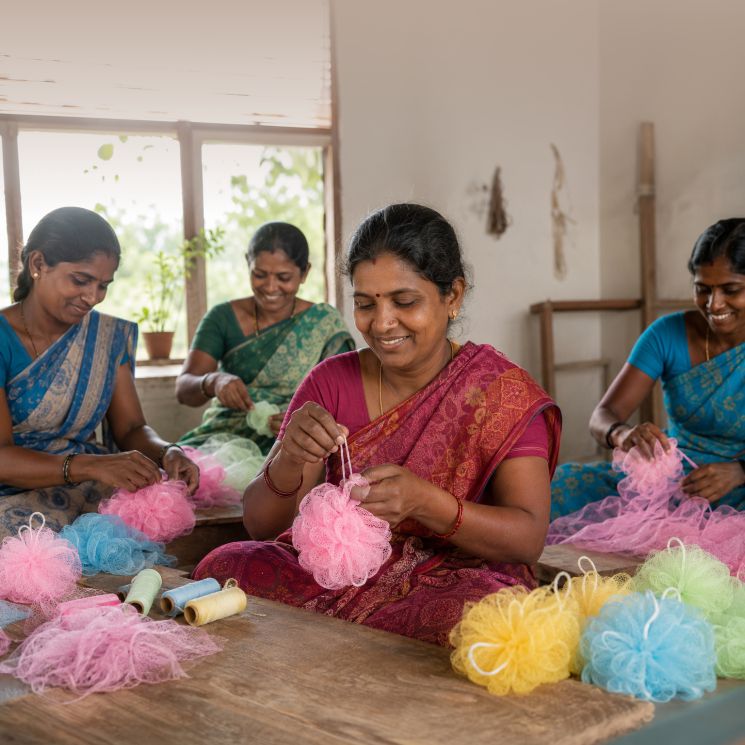
Instead of manufacturing every loofah in a central facility, Chemco supplies raw materials directly to women working from their homes.

They carefully assemble each loofah under hygienic working conditions, following defined quality requirements and production guidelines. Once completed, the finished products are collected, inspected, and prepared for distribution.

This home-based model allows women to work at their own pace while balancing household responsibilities, without the need for daily travel or relocating for employment.

It is a model built on flexibility, trust, and dignity.

Creating Meaningful Livelihoods

For Chemco, this initiative is about much more than manufacturing a product.

It is about creating opportunities that enable women to:

  • Earn an independent income from home
  • Support their families financially
  • Balance work with household responsibilities
  • ⁠Develop confidence through meaningful employment
  • Contribute to their local communities

Every completed loofah represents not only careful craftsmanship but also the determination and resilience of the women who make it.

Quality Begins with People

Chemco’s loofahs are manufactured using quality materials designed for personal care applications.

While product quality remains a priority, we believe that the people behind the product are equally important.

By combining structured processes, quality standards, and home-based production, we strive to ensure that every loofah reflects the care and commitment invested in its making.

Growing Communities, One Loofah at a Time

What began as a thoughtful initiative has already helped create livelihood opportunities for women across rural communities.

Every loofah produced contributes to generating income, strengthening households, and creating opportunities that extend beyond an individual worker.

As the initiative grows, so does its potential to support more women, reach more villages, and positively impact more families.

For Mr. Vaibhav Saraogi, this is only the beginning. His vision is to continue expanding this initiative so that many more women can benefit from flexible, home-based employment while maintaining their family responsibilities.

A Business That Creates More Than Products

At Chemco Group, we believe that responsible business is about creating value at every stage—not only for customers, but also for employees, partners, and communities.

Our Loofah initiative reflects this philosophy by combining manufacturing with meaningful social impact.

Every product represents:

  • Skilled craftsmanship
  • Home-based employment
  • ⁠Women’s economic empowerment
  • ⁠Stronger rural communities
  • A shared commitment to creating opportunities through business

Final Thoughts

Every Chemco loofah has a story.

It is the story of a woman earning with dignity, a family benefiting from an additional source of income, and a business choosing to make a difference beyond manufacturing.

Inspired by the vision of Mr. Vaibhav Saraogi, this initiative demonstrates that empowerment doesn’t always mean asking people to leave home in search of work. Sometimes, meaningful opportunities can be created right where they are needed most.

At Chemco Group, we are proud that every loofah we produce represents more than a personal care product. It represents purpose, opportunity, and the belief that businesses can help build stronger communities—one loofah at a time.

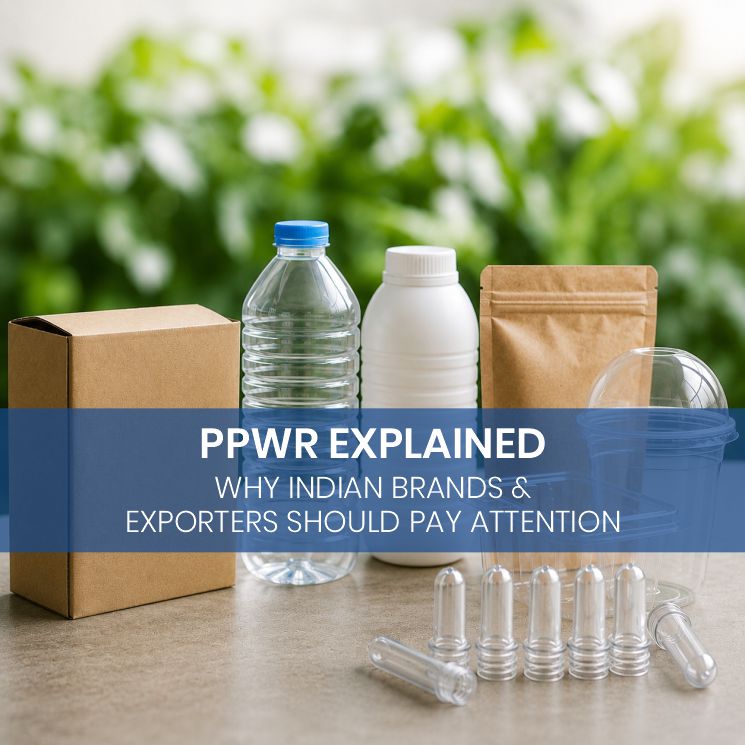
PPWR Explained: Why Indian Brands and Exporters Should Pay Attention

The packaging industry is evolving faster than ever. Around the world, governments are introducing new regulations to reduce packaging waste, improve recyclability, and encourage the use of more sustainable materials.

In India, businesses are already adapting to initiatives such as the Plastic Waste Management (PWM) Rules and Extended Producer Responsibility (EPR). Meanwhile, the European Union has introduced one of its most significant packaging regulations to date—the Packaging and Packaging Waste Regulation (PPWR).

Although PPWR is a European regulation, its influence extends beyond Europe. For Indian manufacturers, exporters, and brands supplying international markets, understanding PPWR can help businesses stay informed about emerging global packaging trends and evolving customer expectations.

In this blog, we’ll explain what PPWR is, why it matters, and what businesses should know.

What Is PPWR?

The Packaging and Packaging Waste Regulation (PPWR) is the European Union’s legislative framework for packaging and packaging waste.

It was adopted in December 2024, entered into force on 11 February 2025, and generally applies from 12 August 2026, with several requirements being introduced in phases over the coming years.

Unlike the earlier Packaging and Packaging Waste Directive (PPWD), adopted in 1994, PPWR applies directly across all 27 EU Member States, creating a more harmonised approach to packaging requirements.

Its objective is to reduce packaging waste while encouraging packaging that supports a more circular economy.

Why Should Indian Businesses Care?

At first glance, PPWR may appear relevant only to companies operating in Europe.

However, many Indian businesses are closely connected to global supply chains.

PPWR may be relevant if your business:

  • Exports products to European markets
  • Manufactures packaging for international brands
  • Supplies multinational FMCG or beverage companies
  • ⁠Plans to expand into global markets
  • Wants to stay ahead of evolving packaging trends

Even businesses that don’t currently export may notice increasing customer expectations around packaging design, recyclability, and responsible material use as global brands align with international standards.

What Is PPWR Trying to Achieve?

Rather than focusing solely on packaging waste, PPWR considers the entire lifecycle of packaging.

Its objectives include:

  • Encouraging packaging that is designed for recyclability
  • Increasing the use of recycled content in certain plastic packaging applications
  • ⁠Reducing unnecessary packaging and excess material
  • ⁠Supporting reuse and refill systems where appropriate
  • improving consistency in labelling and producer responsibilities across the European Union

The overall aim is to improve resource efficiency while ensuring packaging continues to protect products and perform its intended function.

What Does This Mean for Packaging?

One of the biggest changes introduced by PPWR is a shift in how packaging is evaluated.

Traditionally, packaging decisions focused on:

  • Product protection
  • Manufacturing efficiency
  • ⁠Cost
  • ⁠Shelf appeal

Today, businesses are increasingly asking additional questions:

  • ⁠Can this packaging be effectively recycled?
  • Can unnecessary material be reduced?
  • Can recycled content be incorporated where appropriate?
  • ⁠Does the packaging support a circular economy?

These considerations are becoming an increasingly important part of packaging design and product development.

What Does This Mean for PET Packaging?

PET continues to be one of the world’s most widely used packaging materials due to its strength, lightweight properties, clarity, and well-established recycling infrastructure.

As regulations such as PPWR encourage circular packaging solutions, businesses are placing greater emphasis on:

  • ⁠Designing PET packaging for effective recycling
  • Responsible lightweighting without compromising performance
  • ⁠Increasing the use of recycled PET (rPET), where appropriate
  • ⁠⁠Improving compatibility across packaging components such as bottles, closures, and labels

These are areas where packaging innovation will continue to play an important role.

Preparing for the Future

Whether your business exports today or plans to in the future, staying informed about global packaging developments can help you make better long-term decisions.

Questions worth considering include:

  • ⁠Is our packaging designed with recyclability in mind?
  • Can we optimise material use without affecting product performance?
  • ⁠Are we exploring opportunities to incorporate recycled content where appropriate?
  • ⁠⁠Are we keeping pace with evolving customer and regulatory expectations?
  • ⁠⁠⁠Are we collaborating with packaging partners who understand future industry trends?

Taking a proactive approach today can help businesses adapt more confidently to tomorrow’s packaging landscape.

Final Thoughts

PPWR is more than a European regulation—it reflects a broader global shift towards smarter packaging design, resource efficiency, and circularity.

For Indian manufacturers, exporters, and brand owners, understanding regulations such as PPWR is not simply about compliance. It is about recognising where the packaging industry is heading and preparing for changing market expectations.

At Chemco Group, we believe that sharing knowledge is an important part of building better packaging solutions. Through our educational blog series, we aim to simplify industry developments and help businesses navigate the future of packaging with confidence

Choosing the Right PET Packaging: 9 Factors Every Brand Should Consider

Choosing the right PET packaging is about more than selecting a bottle. Every packaging decision—from the bottle and closure to the label and material—plays a role in protecting your product, strengthening your brand, and enhancing the consumer experience.

Whether you’re launching a new product or refreshing an existing one, making the right packaging choices early can improve product performance, streamline production, and help your product stand out on the shelf.

Here are nine key factors every brand should consider when choosing PET packaging.

1. Start with Your Product

Every product has unique packaging requirements, and those requirements should guide your packaging decisions.

For example:
* Beverages require bottles that can withstand filling, transportation, and everyday handling.
* Personal care products often benefit from packaging that’s easy to grip and dispense.
* Food products require packaging that helps preserve freshness while meeting food safety standards.

Understanding your product’s characteristics is the first step toward selecting packaging that performs reliably throughout its lifecycle.

2. Choose a Bottle That Fits Your Brand

Bottle design is about more than appearance—it influences how consumers interact with your product.

When selecting a bottle, consider:

* The right capacity for your product
* A shape that’s comfortable to hold and use
* A design that stands out on retail shelves
* Efficient storage and transportation

The right bottle should strike a balance between functionality and visual appeal, helping your product leave a lasting impression.

3. Select the Right Closure & Neck Finish

The closure and neck finish work together to ensure your product is securely packaged and easy to use.

When choosing a closure system, consider:

* Product compatibility
* Leak-proof sealing
* Filling line compatibility
* Consumer convenience
* Tamper-evident or child-resistant features, where required

A well-matched bottle and closure not only protect the product but also improve the overall user experience.

4. Don’t Forget the Label

A bottle may grab attention, but it’s the label that tells your brand’s story. From product information to visual identity, the label plays a key role in influencing purchasing decisions.

Keep these points in mind:

* Available label panel area
* Label shape and size
* Branding and mandatory product information
* Compatibility with pressure-sensitive, wrap-around, or sleeve labels

Designing the bottle and label together creates a more cohesive and impactful package.

5. Think About the End Consumer

Great packaging should look good—but it should also be convenient to use.

Ask yourself:

* Is the bottle comfortable to hold?
* Is it easy to pour or dispense?
* Can consumers easily open and reclose it?
* Is it convenient to carry, store, and use?

A positive user experience can strengthen customer satisfaction and encourage repeat purchases.

6. Consider Sustainability

As sustainability becomes a priority for both brands and consumers, packaging choices matter more than ever.

Consider options such as:

* Lightweight bottle designs that use less material
* Recyclable PET packaging
* Incorporating recycled PET (rPET)
* Designs that support easier recycling

Thoughtful packaging choices can help reduce environmental impact while supporting your sustainability goals.

7. Think About Your Production Process

Your packaging should work seamlessly with your manufacturing operations.
Before finalizing a bottle, consider:

* Manual or automated filling
* Filling speed
* Hot-fill or cold-fill requirements
* Closure application and capping equipment

Choosing packaging that’s compatible with your production line can improve efficiency and reduce operational challenges.

8. Standard Bottle or Custom Design?

One of the first decisions brands face is whether to choose a standard bottle or develop a custom design.
A standard bottle can help reduce development time and tooling costs, making it ideal for faster product launches.

A custom-designed bottle offers greater flexibility to create a unique brand identity and improve shelf differentiation. While it may require additional investment and development time, it can help products stand out in a competitive market.

The right choice depends on your product, budget, timeline, and branding objectives.

9. Choose the Right Packaging Partner

Selecting the right packaging manufacturer is just as important as selecting the right packaging.

An experienced partner does more than supply bottles—they provide technical expertise, design support, and guidance throughout the development process. From selecting the right material to optimizing bottle design and ensuring consistent quality, the right packaging partner can help bring your vision to life.

Early collaboration often leads to better packaging performance, smoother production, and faster time to market.

Final Thoughts

The right PET packaging does much more than contain a product. It protects what’s inside, reflects your brand, supports efficient production, and creates a positive consumer experience.

By considering your product requirements, bottle design, closures, labeling, sustainability, production process, and long-term business goals, you can make packaging decisions that add value at every stage of the product journey.

At Chemco Group, we work closely with brands to develop PET packaging solutions that combine innovation, quality, and performance. Whether you’re looking for a standard bottle or a custom packaging solution, choosing the right packaging is the first step toward building a successful product.

7 Common Packaging Mistakes Brands Should Avoid

Packaging is often one of the first things consumers notice about a product. It protects what’s inside, reflects your brand, supports manufacturing, and influences the overall customer experience.

Yet, when developing a new product or refreshing an existing one, packaging decisions are sometimes made in haste—focusing on one aspect while overlooking others that are equally important.

Here are seven common packaging mistakes brands should avoid to create packaging that performs well throughout its lifecycle.

1. Choosing Packaging Based Only on Cost

Cost is an important consideration, but it shouldn’t be the only one.

Selecting the lowest-cost packaging may reduce upfront expenses, but it can lead to higher costs in the long run if it affects product protection, manufacturing efficiency, or consumer satisfaction.

Instead of looking only at price, consider the overall value your packaging delivers—from production to the hands of the consumer.

2. Ignoring Your Brand Identity

Packaging is more than a container—it’s an extension of your brand.

The shape, finish, colour, and overall design of your packaging all contribute to how consumers perceive your product. A well-designed package can improve shelf visibility, strengthen brand recognition, and create a memorable first impression.

When choosing packaging, ask yourself:

* Does it reflect my brand’s personality?
* Will it stand out on the shelf?
* Does it create a consistent brand experience?

Choosing a standard bottle may work for some products, but for others, a custom packaging solution can help create stronger brand differentiation.

3. Not Considering Filling Line Compatibility

A bottle may look great, but it also needs to work efficiently on your production line.

Factors such as bottle dimensions, neck finish, closure compatibility, and filling requirements should be considered early in the development process.

Packaging that’s compatible with your manufacturing process can help:

* Improve production efficiency
* Reduce downtime
* Minimise product wastage
* Ensure consistent filling and sealing

Collaborating with your packaging partner during the design stage can help identify potential challenges before production begins.

4. Overlooking Logistics and Supply Chain Requirements

Packaging doesn’t just need to perform on the shelf—it also needs to withstand the journey to get there.

Transportation, warehousing, stacking, and handling can all impact packaging performance.

Before finalising your packaging, consider:

Will it withstand transportation and handling?
Can it be stacked efficiently during storage?
Does it optimise space during shipping?
Is it suitable for your distribution network?

Designing with logistics in mind can help reduce product damage and improve supply chain efficiency.

5. Treating the Label as an Afterthought

A great bottle deserves a great label.

The label is often the first place consumers look for product information, ingredients, usage instructions, and brand messaging. It also plays a significant role in attracting attention on crowded retail shelves.

When planning your packaging, consider:

* Adequate label panel space
* Readability of mandatory information
* Compatibility with your chosen labelling method
* Visual consistency with your brand identity

Designing the bottle and label together creates packaging that is both functional and visually appealing.

6. Ignoring the Consumer Experience

Successful packaging isn’t just attractive—it’s easy to use.

Consumers appreciate packaging that’s comfortable to hold, easy to open, simple to dispense from, and convenient to store.

Small design details can have a big impact on the overall product experience and influence whether consumers choose your brand again.

After all, great packaging doesn’t stop at the point of purchase—it continues throughout the product’s use.

7. Overlooking Sustainability

Sustainability is becoming an increasingly important part of packaging decisions.

Consumers, retailers, and regulators are placing greater emphasis on packaging that uses resources responsibly and supports recycling.

Brands can take meaningful steps by considering:

* Lightweight packaging designs
* Recyclable PET packaging
* The use of recycled PET (rPET), where appropriate
* Designs that support easier recycling

Sustainable packaging isn’t just about meeting today’s expectations—it’s about preparing for the future.

Final Thoughts

Choosing the right packaging requires balancing multiple factors—from product protection and manufacturing efficiency to branding, consumer convenience, and sustainability.

Looking beyond the initial cost and considering the complete packaging journey can help brands avoid common challenges while creating packaging that adds value at every stage.

At Chemco Group, we believe that great packaging is built on thoughtful design, technical expertise, and a deep understanding of our customers’ needs. By working closely with brands, we develop PET packaging solutions that combine functionality, quality, and innovation—helping products perform on the production line, stand out on the shelf, and deliver a great consumer experience.

Beyond the Box: How 4R Packaging Protects Products Across the Supply Chain

When a product leaves the manufacturing facility, its journey is just beginning. Before it reaches a retailer or customer, it may travel hundreds of kilometres, pass through warehouses, and be handled multiple times.

Throughout this journey, the right transit packaging is essential to protect products from damage and ensure they arrive safely.

At Chemco Group, this need is addressed through 4R Packaging—a transit packaging solution designed to combine durability, efficiency, and sustainability.

What Is 4R Packaging?

4R Packaging is Chemco’s range of transit packaging solutions developed to protect products during shipping, storage, and handling.

At the heart of the portfolio is the 4R Box—an innovative shipping box engineered to provide superior protection while supporting more sustainable packaging practices. According to Chemco, the 4R Box has been evaluated by multinational companies for its performance and reliability in demanding shipping conditions.

Why Transit Packaging Matters

Primary packaging protects the product itself, but transit packaging protects the entire shipment.

During transportation, products are exposed to:

* Repeated handling
* Stacking and storage
* Vibrations during transit
* Moisture and environmental conditions

The right transit packaging helps reduce product damage, improve handling, and ensure products reach their destination in excellent condition.

What Makes the 4R Box Different?

The 4R Box is designed to go beyond conventional corrugated cartons by combining strength, durability, and sustainability.

Built for Strength

Chemco’s HDPE/PP laminated cartons are manufactured using 100% recycled plastics recovered from packaging remnants generated within Chemco’s own manufacturing operations. These materials are processed through a closed-loop recycling system, helping convert waste into durable transit packaging.

Enhanced Protection

The HDPE/PP lamination provides improved durability and water resistance compared to conventional paper corrugated cartons, helping reduce product damage during transportation.

Reusable and Recyclable

Unlike many single-use shipping boxes, the 4R Box is designed to be reusable while also being recyclable, supporting more responsible packaging practices and extending the useful life of the packaging.

Moisture and UV Resistance

The 4R Box is engineered to withstand exposure to moisture and UV conditions, helping protect products during storage and transit.

Efficient Storage

The cartons are supplied flat-packed, making them easy to store and assemble when required, helping businesses optimise warehouse space.

Precision in Every Box

Beyond the materials, Chemco’s manufacturing process is designed to deliver consistent quality.

The 4R Box incorporates:

* Precision fluting for enhanced strength
* Sensor-based cutting for accurate dimensions
* Export-grade adhesive for strong bonding
* Stainless steel stitching pins for improved durability

These features contribute to reliable packaging performance across different shipping applications.

Applications Across Industries

The 4R Box is suitable for protecting a wide range of products during transit, including delicate items such as electronics, ceramics, glassware, and other fragile goods. It is available in multiple sizes to accommodate different packaging requirements.

Final Thoughts

Transit packaging is more than just an outer box—it’s an essential part of protecting products throughout the supply chain.

With its HDPE/PP laminated construction, reusable and recyclable design, moisture and UV resistance, and closed-loop manufacturing approach, the 4R Box demonstrates how transit packaging can combine performance with sustainability.

At Chemco Group, 4R Packaging reflects our commitment to developing innovative packaging solutions that help businesses protect their products while supporting a more sustainable future.