
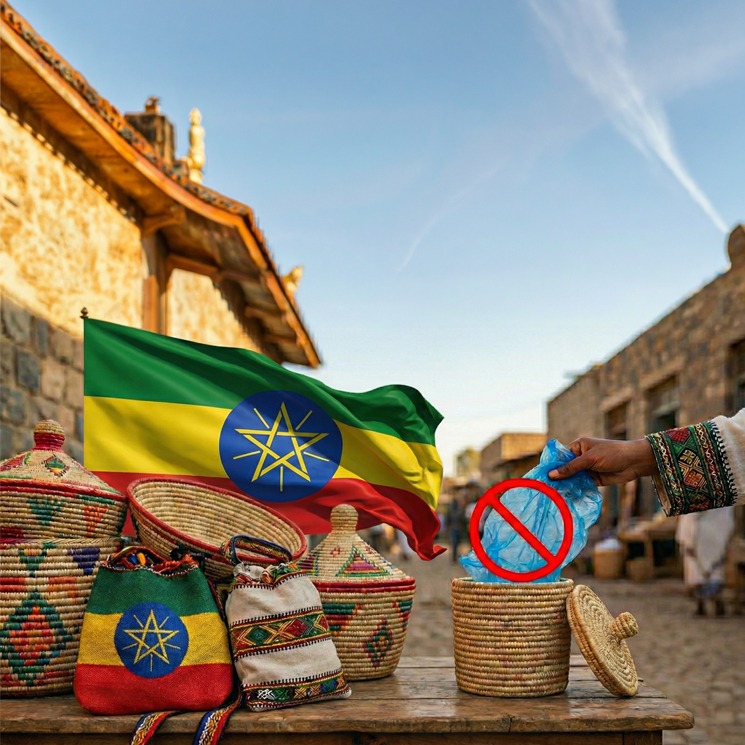
As of 31 January 2026, Ethiopia has officially banned the production, sale, and use of single-use plastic bags, in line with the country’s ongoing commitment to environmental sustainability. This legislation, enacted under Ethiopia’s Solid Waste Management Law (Proclamation 1383/2025), aims to address the environmental impact of plastic waste while promoting cleaner, greener alternatives across the nation.
Strict Penalties for Non-Compliance
The newly enforced ban comes with severe penalties for those violating the law. Individuals caught using or carrying plastic bags face fines ranging from ETB 2,000 ($12.90) to ETB 5,000 ($32.25). In addition, manufacturers, importers, and distributors are subject to hefty fines of up to ETB 200,000 ($1,289.97) and potential prison sentences of up to five years. Institutions found in breach of the law may face fines up to three times those imposed on individuals.
A Step Toward Safer Plastic Practices
The ban is part of Ethiopia’s broader strategy to mitigate the environmental harm caused by plastic waste. It mandates the introduction of safer plastic product designs, reductions in manufacturing waste, and the creation of take-back and recycling systems. The extended producer responsibility framework requires plastic manufacturers to finance the collection and recycling of their products once they reach the end of their lifecycle.
A Regional Trend
Ethiopia’s move to eliminate single-use plastics aligns with similar actions taken by other African nations, including Rwanda, Kenya, Tunisia, and Nigeria. These countries are part of a growing wave of African nations working to tackle plastic pollution and its long-term environmental impact.
The legislation, while introducing strict measures, also allows for certain exemptions where plastic packaging cannot be easily replaced. However, this does not extend to plastic bags, which remain completely prohibited.
Ethiopia’s comprehensive approach is a significant step towards a more sustainable and eco-conscious future, setting a powerful example for other nations in the region and beyond.