
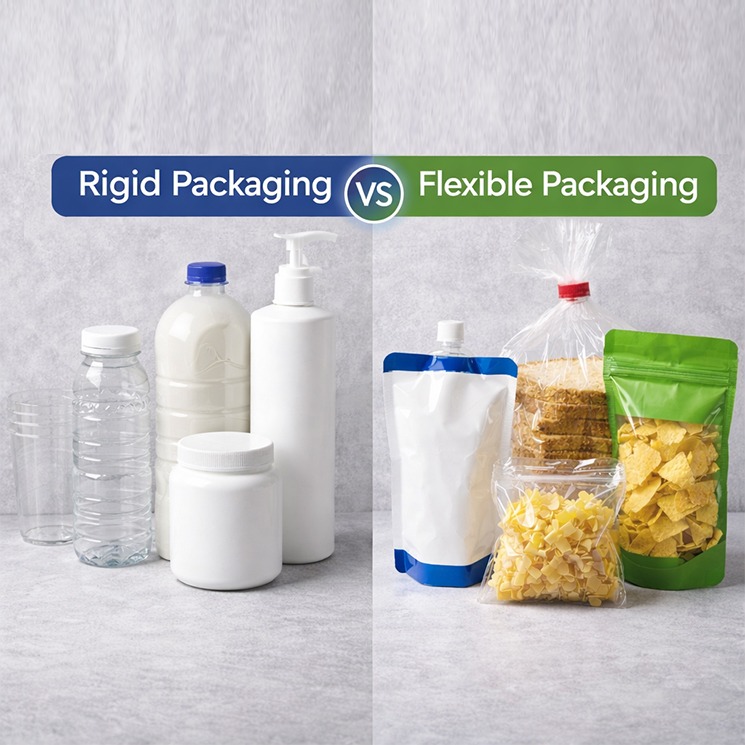
Selecting the right packaging is often as important as the product itself. The material you choose influences protection, cost, logistics, consumer experience and even long-term brand perception. In the packaging industry, these choices are usually grouped into two core categories: rigid and flexible. Each comes with its own strengths, limitations and ideal applications.
This perspective on choosing the right packaging type is especially relevant for brands managing diverse product lines or planning to scale. At Chemco, we work across both rigid and flexible formats, and the practical considerations outlined here reflect what we see every day with our clients across FMCG, food, personal care and industrial markets.
What Defines Rigid and Flexible Packaging?
Flexible Packaging
Flexible packaging refers to pouches, laminates and films that bend easily and conform to the product inside. They offer low material usage, lightweight transport and high customisation. Because they use less material overall, they often deliver cost advantages for high-volume, fast-moving products. Common examples include stand-up pouches, sachets, vacuum bags etc.
Flexible formats perform well for dry foods, snacks, personal care refills and low-risk items. However, they offer limited structural protection. Products can be compressed, pierced or affected by mishandling if not supported by secondary packaging.
Rigid Packaging
Rigid packaging includes jars, bottles, cartons and containers made from plastics, metal, glass or board. These formats maintain shape under stress, offer strong protection and provide a premium look on retail shelves. They are ideal for products that require stability, clarity or long-term storage.
Examples include PET bottles or jars, HDPE bottles, tin cans, glass jars and rigid cartons. Although they use more material and weigh more during transportation, they deliver higher product security.
Key Differences Between Rigid and Flexible Formats
Space Usage
Rigid containers occupy fixed volume. They prevent product crushing but consume more space. Flexible solutions, by contrast, collapse and bundle efficiently, reducing transport and warehouse costs.
Weight
Rigid materials such as PET, HDPE, metal and glass weigh more but offer strength. Flexible materials such as pouches, foils and laminates reduce weight and shipping emissions.
Product Protection
Rigid packaging protects shape-sensitive or fragile items well. Flexible packaging shields products from moisture and contamination but is vulnerable to puncture if not handled carefully.
Cost and Application
Rigid packaging is typically used for electronics, cosmetics, beverages and premium food products. Flexible formats dominate in snack food, frozen food, shampoos, refills and low-cost FMCG goods.
Customisation
Flexible packaging offers design freedom with full-body graphics and variable shapes. Rigid packaging is customisable but can involve higher tooling and decoration costs.
How to Choose the Right Packaging for Your Product
Product Type
The physical form of the product matters. Liquids often suit flexible pouches for economy, unless the brand needs a premium, durable bottle. Fragile or shape-dependent products lean toward rigid.
Budget
Budget determines material, decoration, and production complexity. Flexible packaging usually presents a cost advantage for mass-market products. Rigid packaging supports premium positioning and longer shelf life.
Transport and Distribution
If logistics require dense packing and long-distance movement, flexible formats may be more efficient. If protection and shelf presence are priorities, rigid is the stronger choice.
Consumer Preference
End users influence packaging selection. Consumers may prefer rigid packaging for items they store and reuse, while flexible formats work better for single-use or portable products.
The Bottom Line
Rigid and flexible packaging each serve specific purposes. Understanding their strengths helps businesses make informed decisions that protect their product and elevate the user experience. With a clear assessment of budget, transport conditions and consumer expectations, you can choose a format that aligns with your brand’s goals.
Chemco’s integrated capabilities ensure brands don’t have to choose based on limitation. We help them choose based on strategy ie delivering packaging that performs, protects and strengthens market presence.