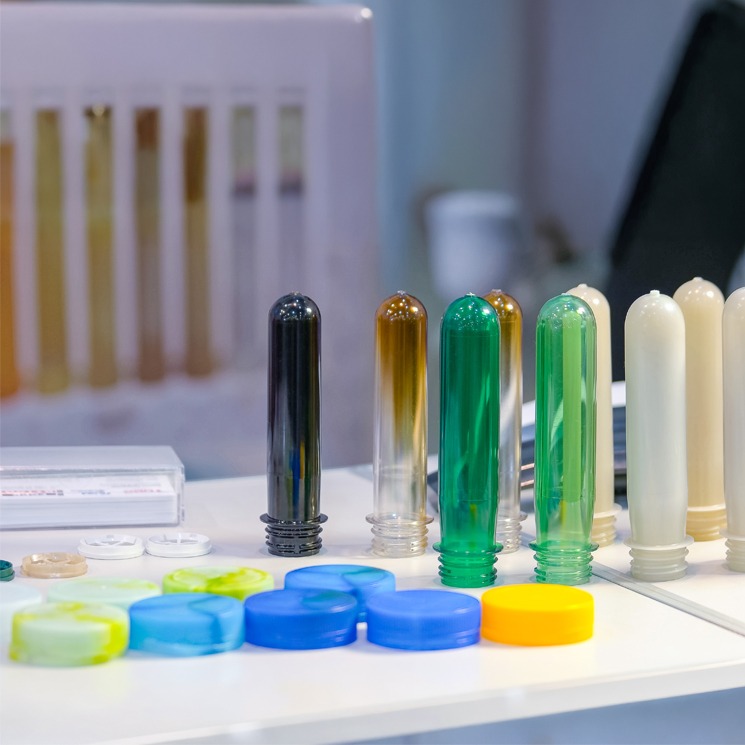
Direct-to-Container Branding: Rethinking Labels in Sustainable Beverage Packaging

The beverage industry is under increasing pressure to reduce material use while maintaining strong brand visibility and regulatory compliance. As sustainability expectations grow, brands are exploring alternatives to traditional labelling, with direct-to-container branding emerging as a viable solution. This approach shifts how packaging is designed, produced, and recycled, offering both opportunities and operational challenges.

Moving Beyond Conventional Labels

Labels have long played a central role in packaging, carrying branding, product information, and compliance details. However, they often introduce complexity into recycling systems due to the use of mixed materials, adhesives, and inks. This can affect material recovery rates and reduce the overall efficiency of recycling processes.

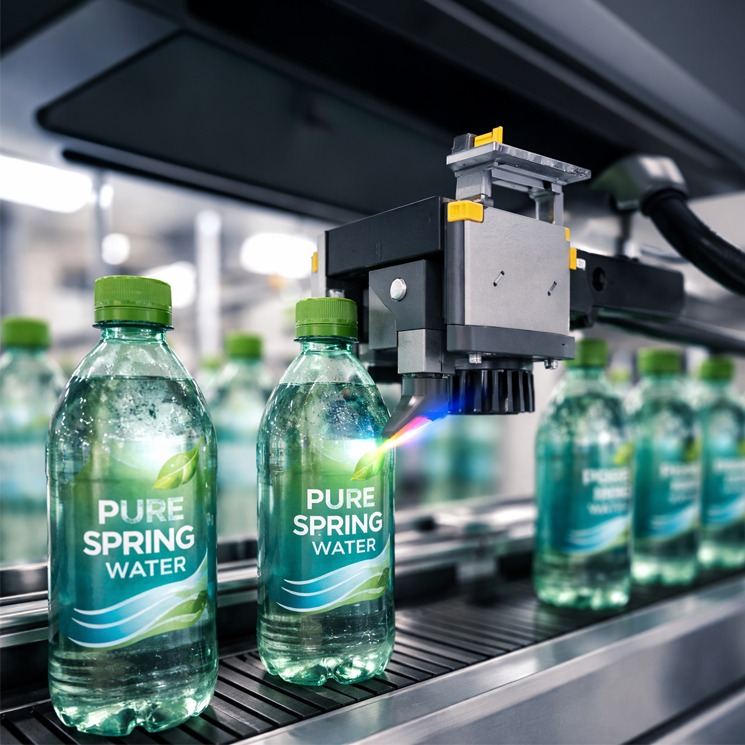
Direct-to-container branding addresses this issue by eliminating labels altogether. Instead, information is applied directly onto the surface of PET, HDPE, or glass containers using technologies such as laser coding or inkjet printing. This simplifies the packaging structure and supports improved recyclability by reducing material variation.

Balancing Sustainability and Brand Visibility

One of the key considerations in adopting label-free packaging is maintaining brand identity. Labels have traditionally served as the primary medium for visual communication, and removing them requires a different design approach.

Brands are responding by using embossed logos, engraved details, and coloured closures to retain recognition without relying on additional materials. These approaches demonstrate that visibility and sustainability can be aligned, provided packaging is designed with both objectives in mind.

At the same time, direct coding technologies allow for the inclusion of regulatory and traceability information without compromising compliance requirements. This ensures that functionality is maintained even as material usage is reduced.

Operational and Technical Considerations

While the concept is straightforward, implementation presents several technical challenges. Achieving consistent print quality and legibility on PET surfaces, particularly under conditions such as condensation, remains a concern. High-speed production environments also require precise and reliable coding systems capable of operating at scale.

These factors influence the pace at which label-free packaging can be adopted. Manufacturers must ensure that new systems integrate seamlessly with existing production lines while maintaining output efficiency and product quality.

Opportunities for Innovation

Despite these challenges, direct-to-container branding presents a clear opportunity for innovation. Hybrid approaches, where partial labelling is combined with direct coding, are already being explored as a transitional step. These solutions reduce material use while allowing brands to adapt gradually to new formats.

Over time, advancements in coding technology are expected to enable greater flexibility in design, improved visual quality, and enhanced functionality. Digital tools such as smart QR codes and watermarks can further extend the role of packaging, supporting traceability and consumer engagement without adding physical materials.

Long-Term Impact on Packaging Strategy

The shift towards label-free packaging reflects a broader change in how sustainability is approached within the industry. It moves the focus from incremental improvements to more fundamental design changes that affect the entire lifecycle of the product.

Reducing reliance on labels can lower carbon emissions, simplify recycling, and reduce manufacturing costs in the long term. At the same time, it requires brands to rethink how they communicate and differentiate their products in the market.

Looking Ahead

Direct-to-container branding is still evolving, but the direction is clear. As regulatory requirements tighten and sustainability targets become more defined, packaging formats that reduce complexity and improve recyclability will gain traction.

For brand owners, the decision is not only about compliance but also about positioning. Early adoption can support stronger sustainability credentials and demonstrate a commitment to practical, scalable solutions. As the technology matures, label-free packaging has the potential to become a standard rather than an exception in beverage packaging.

How PET Preform Design Affects Filling Line Efficiency

In high-volume beverage and liquid packaging, filling line efficiency depends on more than machine speed. It is also shaped by the consistency and design of the PET preform moving through the line. A preform that looks acceptable on paper can still create issues during blowing, filling, capping, and downstream handling if the design is not aligned with production conditions.

For brands and bottlers, this matters because even small variations can lead to unstable processing, higher rejection rates, unnecessary downtime, and avoidable material loss. PET preform design is not only about achieving the final bottle shape. It plays a direct role in how smoothly the entire packaging line performs.

Why preform design matters on the line

A PET preform is the starting point of the bottle-making process. Its dimensions, neck finish, wall distribution, weight, and resin behaviour all influence how the bottle forms and how it behaves once it reaches the filling line.

When preforms are designed correctly, they support stable blowing, consistent bottle performance, accurate filling, and reliable capping. When the design is poorly matched to the application, bottlers often face recurring problems such as bottle distortion, inconsistent neck dimensions, cap leakage, line jams, and product rejection.

In fast-moving operations, these issues quickly affect output.

Neck finish accuracy and capping performance

One of the most important areas in preform design is the neck finish. This section must remain dimensionally precise because it directly affects cap fit, sealing integrity, and torque consistency.

If the neck finish varies even slightly, the capping system can struggle to apply closures correctly. This may result in loose caps, over-torquing, leakage, or bottles being rejected during quality checks. In sectors such as water, edible oil, dairy, and pharmaceuticals, sealing performance is critical not only for line efficiency but also for product safety and shelf life.

Consistent neck finish design helps maintain reliable cap application at high speed and reduces stoppages linked to closure-related faults.

Material distribution affects bottle stability

Preform design also determines how material is distributed once the bottle is blown. This affects the bottle’s strength, base performance, panel stability, and resistance to deformation.

If material distribution is uneven, the bottle may become weak in key areas. On a filling line, that can create problems such as bottle wobble, collapse under pressure, poor conveyor movement, or distortion during filling and capping. Lightweight bottles are especially sensitive to this, because the balance between resin reduction and structural performance has to be carefully managed.

A well-designed preform ensures the final bottle has enough strength where it is needed, without creating unnecessary material usage.

Blowing consistency supports downstream efficiency

Filling line performance begins before the product enters the bottle. If the preform does not heat evenly or stretch correctly during blowing, the resulting bottles may vary in shape, thickness, or clarity. That inconsistency affects everything that follows.

Bottles with poor dimensional control may not sit properly on conveyors, may misalign in fillers, or may fail during capping. In automated lines, these variations can reduce speed and increase intervention from machine operators.

Preforms designed for stable thermal behaviour and repeatable blowing performance help create uniform bottles, which in turn support smoother downstream processing.

Weight optimisation must not compromise performance

Many brands aim to reduce packaging weight to lower resin consumption and improve cost efficiency. While this is a valid objective, excessive lightweighting can create line performance issues if the preform is not properly re-engineered.

A preform with insufficient structural support may lead to bottles that flex too easily during rinsing, filling, or transport through the line. This can reduce line speed and increase handling problems. Weight optimisation must be supported by sound design, proper testing, and an understanding of the actual filling environment.

The most effective preforms are not simply lighter. They are designed to use material efficiently while still delivering reliable performance.

Gate quality and appearance control

The gate area at the base of the preform also matters more than many people realise. Poor gate design or inconsistent gate finishing can influence bottle formation, visual quality, and even stress distribution.

On fast lines, any variation that affects bottle uniformity can contribute to rejection or operational inefficiency. For premium packaging formats, appearance is also part of performance. A bottle that fills correctly but looks inconsistent still creates a commercial problem.

Preform design must therefore support both process stability and final pack quality.

Matching the preform to the product category

Different products place different demands on a PET bottle, which means the preform design must be tailored accordingly. A water bottle, a carbonated soft drink bottle, an edible oil container, and a pharma pack do not require the same design logic.

For example, carbonated beverages need pressure resistance, while edible oil packaging may require better panel strength and controlled pouring performance. Dairy and sensitive liquid applications may place more emphasis on barrier properties, hygiene standards, and hot-fill or warm-fill considerations where relevant.

Using a standard preform across multiple applications may seem efficient, but it often limits performance. A preform designed for the actual product, bottle format, and line conditions usually delivers better operational results.

Consistency is just as important as design

Even a strong design will not perform well if manufacturing consistency is poor. Filling line efficiency depends on receiving preforms that are uniform from batch to batch. Variation in weight, dimensions, moisture control, or resin quality can disrupt blowing performance and bottle handling.

This is why preform quality control is closely linked to line productivity. Reliable supply, tight tolerances, and repeatable manufacturing standards help bottlers maintain output without frequent adjustments.

The wider business impact

When preform design supports line efficiency, the benefits go beyond production metrics. Businesses can see lower rejection rates, reduced downtime, better closure performance, improved bottle integrity, and more predictable output. Over time, this improves cost control and helps maintain packaging quality in the market.

In contrast, poorly optimised preforms can increase hidden costs across the operation. These include machine stoppages, wasted product, excess operator intervention, and customer complaints linked to leakage or bottle failure.

Final thoughts

PET preform design has a direct effect on filling line efficiency because it shapes how the bottle performs at every stage of processing. From blowing consistency and neck finish accuracy to structural strength and capping reliability, the design of the preform influences both operational speed and pack quality.

For packaging operations focused on scale, consistency, and cost control, the right preform is not a minor component. It is a critical part of line performance. Businesses that invest in well-engineered, application-specific PET preforms are better placed to improve productivity and reduce avoidable losses across the packaging cycle.

India’s 40% Recycled PET Mandate Signals a Structural Shift in Food-Grade Packaging

India is entering a more decisive phase in its plastics circularity roadmap with the introduction of a 40% recycled content requirement for food-grade PET packaging from April 2026. The mandate, issued by the Ministry of Environment, Forest and Climate Change, marks a significant escalation in regulatory expectations and sets a clear direction for how packaging materials will be sourced and processed going forward.

Strengthening the Role of Recycled PET

The move is designed to accelerate the adoption of recycled PET across food and beverage packaging, while reducing dependence on virgin material. Industry bodies, including the Association of PET Recyclers Bharat, have indicated that the mandate could help stabilise supply chains that have recently been affected by geopolitical volatility and fluctuations in raw material availability.

By formalising demand for recycled content at scale, the regulation is expected to create a more predictable market for rPET, encouraging both capacity expansion and long-term investment in recycling infrastructure.

Clear Targets with Transitional Flexibility

The 40% requirement applies to the 2026–27 period, building on earlier targets of 30% for the previous year. Importantly, the policy includes provisions that allow companies to carry forward shortfalls for up to three years, with structured compliance requirements to close these gaps progressively.

This approach reflects a balance between regulatory enforcement and operational reality, giving producers time to align sourcing, processing, and production systems with the new standards.

Capacity Expansion Already Underway

India’s recycling ecosystem has begun responding to these requirements with measurable investment. According to industry estimates, 15 to 18 food-grade rPET facilities have been established, with a combined processing capacity of approximately 300,000 metric tonnes. These developments represent investments in the range of ₹9,000 to ₹10,000 crore, indicating strong alignment between policy direction and industry response.

In parallel, regulatory approvals have enabled additional capacity to come online, with multiple facilities meeting international safety standards for food-grade recycled materials. This is critical for ensuring that recycled content can be used in high-compliance applications without compromising quality or safety.

Implications for the Packaging Value Chain

For brand owners, converters, and packaging manufacturers, the mandate introduces a more structured requirement to integrate recycled content into production at scale. This will require tighter coordination across sourcing, processing, and manufacturing stages.

It also shifts the focus from voluntary sustainability commitments to measurable compliance. Companies will need to demonstrate not only intent but also the ability to secure consistent volumes of high-quality recycled material that meets food-grade specifications.

At the same time, increased demand for rPET is expected to strengthen the domestic recycling market, supporting collection systems, improving material recovery rates, and reducing plastic leakage into the environment.

Looking Ahead

India’s 40% recycled PET mandate represents a clear move towards a more circular packaging economy. The policy establishes both a target and a framework for execution, signalling that recycled content will play a central role in the future of packaging.

The next phase will depend on how effectively the industry can scale supply, maintain material quality, and integrate recycled content into mainstream production. With capacity expansion already underway and regulatory clarity in place, the foundation has been set. Execution will determine how quickly the system delivers on its intended outcomes.

Indian Government Subsidy for Pond Liners: What Farmers Need to Know

Water availability has become one of the most important factors in farm planning across India. In many regions, rainfall is uneven, groundwater is under pressure, and irrigation costs continue to influence cropping decisions. This is why farm ponds and pond liners have become increasingly relevant. A lined pond helps farmers store rainwater or pumped water with lower seepage losses, which improves irrigation reliability and supports better water management at field level. The broader policy direction behind this is consistent with the objectives of Pradhan Mantri Krishi Sinchayee Yojana, which focuses on expanding access to irrigation, improving on-farm water use efficiency, and promoting water conservation and water harvesting.

One point needs to be understood clearly at the start. India does not operate with one single nationwide subsidy rate for pond liners. In practice, support for pond lining is usually delivered through state agriculture, horticulture, irrigation, watershed, or tribal welfare schemes, often aligned with wider water conservation programmes. This means the subsidy available to a farmer depends on the state, the category of farmer, the approved pond size, the type of lining material, and the scheme under which the application is processed.

This state-led structure is easy to see in current scheme examples. In Maharashtra, the Dr. Babasaheb Ambedkar Agricultural Self-Reliance Scheme listed by Zilla Parishad Satara provides support for plastic lining of farm ponds at 90 per cent of the approved cost or actual expenditure, whichever is lower, up to Rs 2 lakh. The same page also states that the scheme is aimed at Scheduled Caste and Navabuddha farmers and requires documents such as land records, Aadhaar, and an Aadhaar-linked bank account, with applications routed through the MahaDBT portal.

A similar pattern appears in Maharashtra’s Birsa Munda Agricultural Revolution Scheme for Scheduled Tribe farmers. The Zilla Parishad Akola page lists plastic lining of farm ponds with assistance of Rs 2 lakh and sets out basic eligibility such as caste certificate, land documents, Aadhaar linkage, and minimum landholding conditions. Pune Zilla Parishad also lists “lining to the farm pond” among the agriculture department components, with a maximum subsidy of Rs 2,00,000 under these district-level implementations.

Karnataka offers another useful example of how subsidy structures vary by category. The state agriculture department’s citizen charter for Krishi Bhagya shows polythene or alternate lining, intended to reduce evaporation and percolation loss, with a maximum support of Rs 50,000. The same document shows different subsidy rates by category, including 80 per cent for general farmers and 90 per cent for SC/ST farmers under Krishi Bhagya, with higher rates shown for the special package category. The Karnataka department website also shows that Krishi Bhagya guidelines and liner-related circulars continued to be published for 2025-26, which indicates the scheme remains operational in an updated administrative form.

Rajasthan illustrates the same principle from a different angle. On the Raj Kisan portal, the Khet Talai page states that farmers can receive 60 per cent of cost subject to a ceiling of Rs 63,000 for an earthen farm pond, and up to Rs 90,000 where plastic lining is included, subject to the lower of the approved or actual amount. The page also specifies a minimum pond capacity of 400 cubic metres, a minimum 0.3 hectare landholding in one location, online application through the portal or e-Mitra centres, and direct transfer of subsidy after departmental approval and verification.

For farmers, the practical lesson is straightforward. Pond liner subsidy is available in India, but it is application-based, document-driven, and scheme-specific. In most cases, farmers should expect to provide land ownership records, identity proof, bank details linked for direct benefit transfer, and compliance with technical specifications such as pond dimensions, liner standards, and departmental inspection. Under the broader subsidy framework for irrigation support, the Government of India also continues to emphasise Aadhaar-linked registration, direct benefit transfer, and state-level implementation through designated nodal departments.

From a policy perspective, pond liners are not just an input purchase. They are part of a larger push towards water security, crop stability, and better use of limited irrigation resources. For farmers in drought-prone, rain-fed, or water-stressed areas, a lined farm pond can improve the usefulness of harvested water and reduce avoidable losses. For that reason, government support for pond lining should be viewed as a productivity measure as much as a subsidy measure. The exact financial benefit may differ from one state to another, but the direction is clear: efficient on-farm water storage is being treated as an important part of agricultural resilience.

Before applying, farmers should always check the latest notification on their state agriculture or horticulture portal, because subsidy ceilings, beneficiary categories, technical specifications, and portal procedures can change from one financial year to the next.

Custom PET Preforms: When Brands Need More Than a Standard Format

Custom PET preforms are becoming increasingly important as brands look for packaging that delivers more than basic functionality. In sectors such as beverages, edible oils, personal care, pharmaceuticals, and household products, packaging must support product performance, production efficiency, and brand identity at the same time. While standard PET preforms work well for many general applications, they are not always the right fit for businesses with specific technical or commercial requirements.

A PET preform plays a direct role in determining the quality and performance of the final bottle or container. It affects shape, strength, weight, neck finish, clarity, and compatibility with closures and filling lines. When these requirements go beyond what a standard format can offer, custom PET preforms provide a more suitable solution.

What makes a PET preform custom?

A custom PET preform is developed to suit a specific end-use application. This may involve a unique neck size, adjusted weight, custom colour, modified dimensions, or performance features designed for a particular bottle shape or production process. The aim is to create a preform that supports the exact needs of the product and the packaging line.

This approach helps brands avoid the limitations that often come with off-the-shelf formats. Instead of adapting the product to suit standard packaging, the packaging is designed to support the product more effectively.

Why brands choose custom PET preforms?

One of the main reasons brands move towards custom PET preforms is differentiation. In competitive markets, packaging has a direct influence on how a product is perceived. A distinctive bottle shape, improved proportions, or a specific colour tone can help a product stand out and strengthen shelf presence.

Performance is another key factor. A custom preform can improve bottle strength, support better material distribution, and reduce issues during blowing, filling, capping, and transportation. This is especially valuable for brands working with demanding storage, shipping, or high-speed production environments.

Customisation can also support weight optimisation. By refining the preform design, manufacturers can reduce unnecessary material use while maintaining the required strength and performance of the final container. Over large production volumes, this can contribute to both cost efficiency and sustainability goals.

Where standard formats may fall short?

Standard PET preforms are practical for widely used bottle designs and straightforward applications. However, they may be limiting when a brand needs specialised packaging characteristics. This could include a non-standard closure, a premium bottle design, better top-load performance, or packaging that must meet specific filling conditions.

In these cases, a standard preform may create compromises in appearance, efficiency, or functionality. A custom solution gives brands more control over the final outcome and helps ensure the packaging performs as intended throughout the supply chain.

The value of the right development partner

Developing a custom PET preform requires technical understanding, precision tooling, and consistent manufacturing quality. The right partner should be able to assess the application, understand the final bottle requirement, and support the development process from concept to production.

This matters because a well-designed preform can improve long-term packaging consistency and reduce production issues. For growing brands, that reliability becomes even more important as volumes increase and packaging demands become more complex.

Conclusion

Custom PET preforms give brands the flexibility to create packaging that is better aligned with product needs, operational requirements, and market positioning. They help improve bottle performance, support efficient production, and offer greater scope for packaging differentiation. For businesses that need more than a standard format, custom PET preforms are a practical step towards better packaging results.