Rigid Packaging vs Flexible Packaging: How to Choose the Right Fit for Your Product

Selecting the right packaging is often as important as the product itself. The material you choose influences protection, cost, logistics, consumer experience and even long-term brand perception. In the packaging industry, these choices are usually grouped into two core categories: rigid and flexible. Each comes with its own strengths, limitations and ideal applications.
This perspective on choosing the right packaging type is especially relevant for brands managing diverse product lines or planning to scale. At Chemco, we work across both rigid and flexible formats, and the practical considerations outlined here reflect what we see every day with our clients across FMCG, food, personal care and industrial markets.

What Defines Rigid and Flexible Packaging?

Flexible Packaging
Flexible packaging refers to pouches, laminates and films that bend easily and conform to the product inside. They offer low material usage, lightweight transport and high customisation. Because they use less material overall, they often deliver cost advantages for high-volume, fast-moving products. Common examples include stand-up pouches, sachets, vacuum bags etc.
Flexible formats perform well for dry foods, snacks, personal care refills and low-risk items. However, they offer limited structural protection. Products can be compressed, pierced or affected by mishandling if not supported by secondary packaging.
Rigid Packaging
Rigid packaging includes jars, bottles, cartons and containers made from plastics, metal, glass or board. These formats maintain shape under stress, offer strong protection and provide a premium look on retail shelves. They are ideal for products that require stability, clarity or long-term storage.
Examples include PET bottles or jars, HDPE bottles, tin cans, glass jars and rigid cartons. Although they use more material and weigh more during transportation, they deliver higher product security.

Key Differences Between Rigid and Flexible Formats

Space Usage
Rigid containers occupy fixed volume. They prevent product crushing but consume more space. Flexible solutions, by contrast, collapse and bundle efficiently, reducing transport and warehouse costs.
Weight
Rigid materials such as PET, HDPE, metal and glass weigh more but offer strength. Flexible materials such as pouches, foils and laminates reduce weight and shipping emissions.
Product Protection
Rigid packaging protects shape-sensitive or fragile items well. Flexible packaging shields products from moisture and contamination but is vulnerable to puncture if not handled carefully.
Cost and Application
Rigid packaging is typically used for electronics, cosmetics, beverages and premium food products. Flexible formats dominate in snack food, frozen food, shampoos, refills and low-cost FMCG goods.
Customisation
Flexible packaging offers design freedom with full-body graphics and variable shapes. Rigid packaging is customisable but can involve higher tooling and decoration costs.

How to Choose the Right Packaging for Your Product

Product Type
The physical form of the product matters. Liquids often suit flexible pouches for economy, unless the brand needs a premium, durable bottle. Fragile or shape-dependent products lean toward rigid.
Budget
Budget determines material, decoration, and production complexity. Flexible packaging usually presents a cost advantage for mass-market products. Rigid packaging supports premium positioning and longer shelf life.
Transport and Distribution
If logistics require dense packing and long-distance movement, flexible formats may be more efficient. If protection and shelf presence are priorities, rigid is the stronger choice.
Consumer Preference
End users influence packaging selection. Consumers may prefer rigid packaging for items they store and reuse, while flexible formats work better for single-use or portable products.

The Bottom Line

Rigid and flexible packaging each serve specific purposes. Understanding their strengths helps businesses make informed decisions that protect their product and elevate the user experience. With a clear assessment of budget, transport conditions and consumer expectations, you can choose a format that aligns with your brand’s goals.
Chemco’s integrated capabilities ensure brands don’t have to choose based on limitation. We help them choose based on strategy ie delivering packaging that performs, protects and strengthens market presence.

Navigating the New EU Regulation on Recycled Plastics in Packaging

As industrial leaders, we must stay ahead of regulatory shifts that impact how we source, process and deploy recycled plastics in production. The Regulation (EU) 2025/40 (PPWR), which entered into force on 11 February 2025 and becomes fully applicable from 12 August 2026, sets out mandatory recycled content, recyclability, labelling and traceability requirements for all packaging placed on the EU market.

Key Provisions

The regulation mandates minimum recycled material percentages in packaging. For example, packaging that is contact-sensitive (such as food packaging) requires at least 30 % recycled content for single-use PET and 10 % for other plastics. For other plastic packaging the minimum is 35 %, and for single-use beverage bottles the minimum is 30 %.

From 2030 onward, all packaging placed on the market must be recyclable.

The regulatory framework also imposes obligations on traceability of materials, proof of chemical safety, absence of contaminants, and appropriate labelling and information disclosure.

What We Need to Focus On

To meet these requirements, companies must invest in systems that ensure the quality and traceability of recycled streams. This means:

Verifying that recycled input is free from contaminants and meets defined quality standards.

Establishing documentation and traceability protocols that can prove the origin, processing and characteristics of recycled feedstocks.

Ensuring compliance with chemical safety criteria i.e. verifying that additives, catalysts or production residues do not compromise safety.

Adjusting packaging design, manufacturing and supply-chain practices to align with the mandated minimum recycled content and recyclability targets.

Strategic Implications

From a strategic standpoint, compliance can become a competitive differentiator. Companies that embed recycled materials effectively and transparently will have an advantage in public tenders, growing sustainability-driven procurement, and alignment with the broader EU Green Deal objectives. Concurrently, the regulation presents an opportunity for innovation: sourcing non-contaminated virgin production scraps, developing circular-economy feedstocks, and redesigning packaging for easier reuse and recycling.

Challenges Ahead

However, this transition is not without hurdles:

The certification burden is real. We must demonstrate that recycled inputs are traceable and segregated, especially if using production scraps rather than post-consumer waste.

Increased documentation, auditing and testing will be required i.e. polymer compliance checks, migration tests, process and material audits.

Operational costs may rise initially as we adapt infrastructure, supply chains and quality control to meet the standards.

Practical Steps for Implementation

Map your current packaging portfolio, identifying which items will fall under the regulation and which will need redesign or reformulation.

Establish or upgrade traceability systems for recycled input streams i.e. from waste collection, sorting, processing to final product.

Engage with suppliers of recycled material to secure verified, low-contaminant feedstocks and request relevant certifications.

Integrate recycling and recycled-content goals into packaging design from the outset i.e. material choice, structure, ease of separation, labelling.

Monitor upcoming enforcement timelines closely and prepare for audits, certification requirements and supporting documentation to validate compliance.

Final Thoughts

Regulation (EU) 2025/40 sets a rigorous framework for the use of recycled plastics in packaging. It demands that we elevate our practices around material quality, traceability and recyclability. The challenge is significant, but so is the opportunity: to embed circular-economy principles into our operations, unlock innovation in material reuse, and meet evolving stakeholder expectations around sustainability. Acting now prepares us not only to comply, but to lead.

AI-Powered Recycling: Transforming Sorting and rPET Production

The rigid packaging industry is undergoing a technological revolution, driven by the increasing demand for sustainable solutions and artificial intelligence (AI)-driven automation. AI is redefining recycling efficiency, particularly in the sorting process, enabling a high-purity, circular economy for rigid plastics. As industries transition to higher rPET content, AI-powered solutions are essential to maintaining regulatory compliance, operational efficiency, and material quality.

The Challenge of High-Purity rPET Production

Producing food-grade recycled PET (rPET) requires a highly precise sorting of post-consumer PET bottles, ensuring that only food-contact approved plastics are reprocessed. Contamination from non-food PET, coloured plastics, and foreign polymers significantly impacts the safety, performance, and regulatory compliance of rPET. Traditional sorting methods often struggle with accuracy and scalability, making AI-based automation a game-changing solution.

AI-Driven Sorting: A Technological Breakthrough

AI-powered sorting systems analyse bottle characteristics in real-time, dramatically improving sorting precision. Advanced machine learning algorithms and near-infrared (NIR) detection enable:

  • Polymer Identification – Distinguishing PET from other plastics such as HDPE and PP.
  • Colour Sorting – Enhancing stream efficiency by accurately separating clear, blue, and green PET bottles.
  • Food vs. Non-Food Differentiation – Ensuring compliance with food-contact safety standards by eliminating non-food PET contamination.

These advancements significantly improve the quality of rPET feedstock, enabling the production of high-IV, food-grade recycled materials suitable for beverage bottles, pharma, and food packaging applications.

Optimising rPET Production with AI

The adoption of AI-powered sorters offers tangible benefits:

  • Unmatched Sorting Accuracy – Achieving up to 98-100% purity in post-consumer PET bottle separation.
  • Regulatory Compliance – Aligning with EFSA guidelines, which mandate that food-grade rPET feedstock contains no more than 5% non-food PET bottles. Future FSSAI regulations in India are expected to adopt similar benchmarks.
  • Scalability & Efficiency – AI enables high-speed processing of large waste volumes, increasing throughput while reducing manual intervention.
  • Enhanced rPET Quality – AI-driven precision sorting ensures that food-grade rPET retains its strength, clarity, and compliance with packaging performance standards.

AI’s Growing Role in India’s Recycling Industry

AI-powered recycling is gaining traction globally, with Indian, European, and Chinese manufacturers pioneering the development of automated sorting systems. Given India’s 30% rPET content mandate in packaging by 2025-26, implementing high-efficiency AI sorting solutions will be critical in meeting sustainability goals, reducing virgin PET dependency, and strengthening domestic recycling infrastructure.

The Future of AI in Rigid Plastic Recycling

AI continues to evolve, enhancing sorting accuracy, adaptability, and efficiency. Future advancements will refine the ability to identify and segregate complex contaminants, improve circularity, and enable the scalability of closed-loop recycling. As regulations tighten and consumer demand for sustainable packaging grows, AI will play a pivotal role in transforming rigid plastic recycling into a truly circular, high-performance industry.

Global Beverage Packaging Market Set to Reach USD 221.5 Billion by 2032

The global beverage packaging market is on track for strong growth over the next decade, with new research from Meticulous Research forecasting the market to reach USD 221.5 billion by 2032, expanding at a compound annual growth rate (CAGR) of 4.9 percent from 2025 to 2032.

The study, titled “Beverage Packaging Market by Material Type, Packaging Type, Beverage Formulation, and Geography – Global Forecast to 2032,” highlights how the market’s expansion is being fuelled by evolving consumer preferences and rapid innovation in sustainable packaging technologies.

According to the report, growth is being driven by the rising global consumption of ready-to-drink (RTD) beverages, including both alcoholic and non-alcoholic options. Increasingly fast-paced lifestyles are creating demand for convenient, portable, and single-serve packaging formats such as PET bottles, cans, tetra packs, and pouches.

Beyond consumption trends, the expansion of diverse retail channels, the popularity of health-oriented beverages, and advancements in fill-finish processes are contributing to a shift toward more customised and efficient packaging solutions.

Sustainability continues to be a defining force in market transformation. Beverage producers are increasingly adopting biodegradable, recyclable, and refillable packaging options, supported by growing investment in monomaterials and circular design systems. The move towards recycled plastics, aluminium, and paper-based materials reflects a broader industry effort to reduce waste and lower the carbon footprint of beverage production.

Regionally, Asia-Pacific is expected to remain the leading market, accounting for more than 39 percent of global share by 2025. The region’s growth is attributed to urbanisation, population expansion, and changing consumer behaviour that favours convenience and premium beverage formats. North America and Europe are also projected to maintain strong positions, supported by advanced retail infrastructure and stringent sustainability regulations.

The coming years will see beverage packaging evolve beyond functionality to become an integral part of sustainability strategy and consumer experience. As innovation continues to reshape materials, design, and production efficiency, packaging will remain a key driver of growth and differentiation across the global beverage landscape.

Source: www.meticulousresearch.com

Europe’s Recycling Industry Nears a Breaking Point

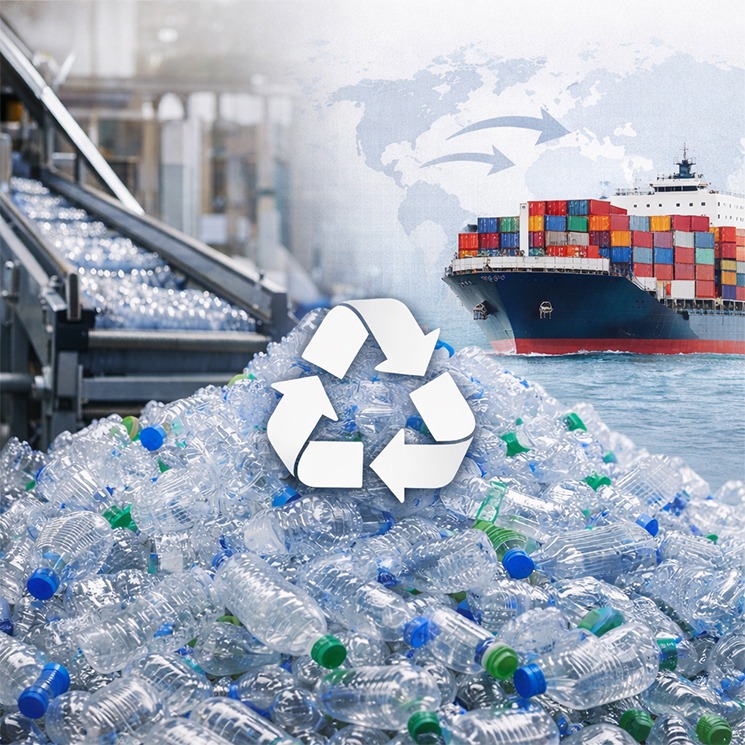
The European plastics recycling industry is entering one of its most difficult phases in recent years. According to industry association Plastics Recyclers Europe (PRE), the sector is facing what it calls an “imminent collapse” driven by a surge in low-cost imports, declining demand for EU-made recyclates, increasing operational costs, and complex regulations that have slowed down recovery efforts.

PRE’s latest findings suggest that by the end of 2025, Europe could lose nearly one million tonnes of recycling capacity compared with 2023. Between January and July 2025 alone, capacity losses have already equalled those of the entire previous year, marking one of the sharpest declines in recent memory. Markets in Germany, the Netherlands, and the United Kingdom have experienced some of the most significant setbacks.

The organisation warns that this downturn is a clear reflection of the economic slowdown’s impact on the recycling sector. For the first time in several years, Europe’s recycling growth forecasts have flatlined, signalling a potential halt in the continent’s progress toward a circular economy.

In response, PRE is calling on policymakers to act swiftly. The group recommends the introduction of effective trade and market defence measures to protect EU recyclers from underpriced imports. It also urges consistent enforcement of Extended Producer Responsibility (EPR) frameworks across member states, simpler permitting procedures, and improved access to clean, affordable energy. Additionally, PRE emphasises the need for stronger customs controls and targeted investment incentives to help restore market stability.

The association cautions that if these challenges remain unaddressed, Europe risks undoing more than a decade of environmental progress. The collapse of the recycling sector, it says, could compromise both the EU’s climate goals and its leadership in sustainable innovation.

The coming months will be crucial for European policymakers and recyclers alike. Decisions made now will determine whether Europe strengthens its commitment to circularity or faces a setback that could reshape its environmental and industrial landscape for years to come.

Source: www.plasticsrecyclers.eu