
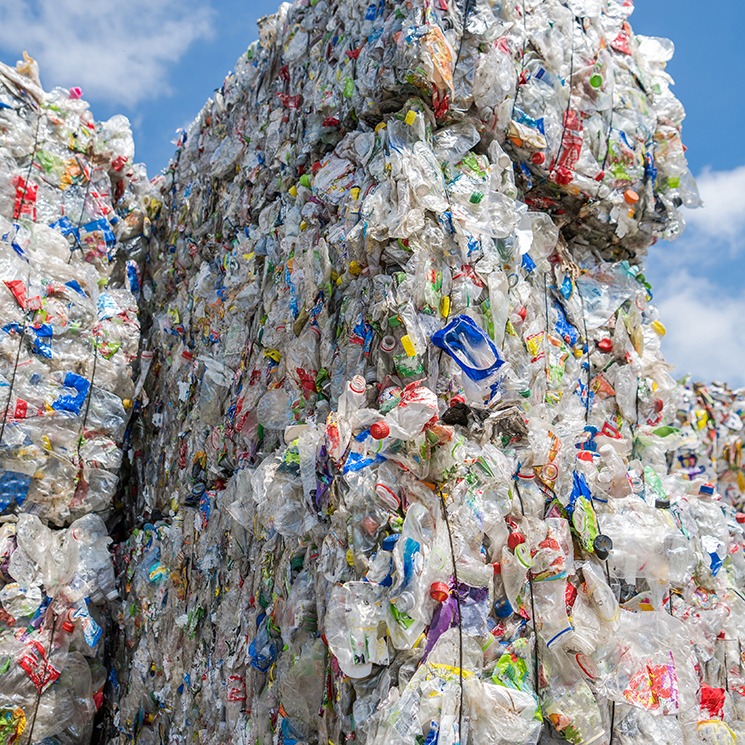
As demand for recycled PET continues to grow, the conversation is moving beyond recycled content targets and towards material quality. In the packaging industry, that distinction matters. Using rPET made from post-consumer PET bottles is not simply about recovering waste. It is about producing a recycled resin stream that is stable, processable, and suitable for new packaging applications.
The quality of rPET bottles begins long before reprocessing. It starts with how used PET bottles are collected, handled, sorted, washed, and converted into flakes or pellets. Every stage in that chain affects the final output. For converters and brand owners, understanding this is essential because poor-quality recycled material can create challenges in preform moulding, blow moulding, clarity, colour consistency, and food-contact compliance.
Collection Quality Sets the Starting Point
The quality of recycled PET is heavily influenced by the quality of the incoming bottle stream. If collection systems deliver PET bottles that are heavily mixed with other plastics, metal, paper, food residue, or non-recyclable waste, the recycler begins with a disadvantage. A clean, well-segregated collection stream improves both yield and final resin quality.
In practical terms, bottle-to-bottle recycling works best when PET bottles are collected with minimal contamination and sorted early in the chain. The more mixed the feedstock, the more difficult and expensive it becomes to recover high-quality material. For the recycling industry, collection efficiency is not just an environmental issue. It is the first quality control point.
Sorting Accuracy Has a Direct Impact on rPET Performance
Once collected, used PET bottles must be sorted correctly. This stage is critical because recycled PET intended for packaging cannot carry excessive contamination from PVC, polyolefins, coloured bottles, labels, caps, adhesives, or foreign materials. Even small levels of incompatible material can affect the performance of the recycled output.
Sorting technology and process discipline play a major role here. Near-infrared sorting, colour separation, metal removal, and manual quality checks all help improve feedstock purity. Clear PET bottle streams are particularly valuable because they provide greater flexibility in reprocessing and support higher quality end applications. Poor sorting, by contrast, reduces the consistency of the recycled resin and limits where it can be used.
Contamination Control Is Central to Recycled PET Quality
In bottle-to-bottle recycling, contamination is one of the biggest determinants of material quality. Contamination can come from product residue inside bottles, dirt and moisture during storage, mixed polymers, multilayer packaging, shrink sleeves, labels, adhesives, and closure components.
If these contaminants are not removed effectively, they can affect intrinsic viscosity, colour, odour, acetaldehyde levels, and process stability during remanufacturing. For converters, this may result in black specks, haze, inconsistent melt behaviour, or rejection on the production line. For food and beverage applications, contamination control becomes even more important because the recycled material must meet stricter safety and compliance expectations.
Washing and Flake Preparation Determine Process Readiness
After sorting, the bottles move into washing and size reduction. This stage is often underestimated, but it has a direct effect on the final usability of the material. Effective hot washing, friction washing, rinsing, and drying are required to remove residues, glue, paper, fines, and other surface contaminants before the PET is turned into clean flakes.
High-quality PET bottle recycling depends on producing flakes with consistent size, low moisture, low contamination, and stable bulk characteristics. Flake quality matters because it determines how the material behaves in downstream reprocessing. If the flakes are inconsistent or poorly cleaned, that problem carries forward into extrusion, pelletising, and eventually into packaging conversion.
Intrinsic Viscosity and Thermal History Must Be Managed Carefully
One of the more technical factors affecting recycled PET quality is intrinsic viscosity, often referred to as IV. In simple terms, IV influences the strength and processability of PET during remanufacturing. Used bottles go through thermal and mechanical stress during their first life and then again during recycling. If that thermal history is not managed carefully, polymer degradation can reduce performance.
This is why decontamination, drying, extrusion control, and in some cases solid-state polycondensation are so important in the rPET process. These steps help restore or stabilise material properties so that the recycled PET can be used effectively in demanding packaging applications. For converters working with preforms and bottles, IV consistency is essential for stable processing and reliable pack performance.
Colour and Clarity Depend on Feedstock Discipline
For many packaging applications, especially beverages, the visual quality of rPET matters nearly as much as its mechanical performance. The colour and clarity of recycled PET are directly affected by the input bottle mix. A stream with high levels of coloured bottles, opaque PET, additives, or degraded material will produce a less clear recycled output.
That has commercial consequences. Brand owners want packaging that supports both sustainability objectives and shelf appeal. If the recycled resin has excessive yellowness, haze, or visual inconsistency, it becomes more difficult to use in premium applications. This is why disciplined bottle collection, accurate colour sorting, and controlled reprocessing are all essential to achieving high-quality food grade rPET.
Food-Grade Applications Require Stronger Decontamination Standards
When rPET is intended for direct food or beverage contact, the quality threshold becomes significantly higher. The recycling process must demonstrate that potential contaminants have been effectively removed and that the final material is suitable for safe use in packaging.
This requires more than standard mechanical recycling. It requires a controlled bottle-to-bottle process with validated decontamination, traceable input streams, and strict operating parameters. For packaging manufacturers, this is a critical point. Not all recycled PET is equal, and not every recycled stream is suitable for food-contact use. The ability to produce high-quality rPET from used PET bottles depends on both feedstock quality and process capability.
Reprocessing Quality Determines End-Use Value
The final stage is reprocessing the cleaned PET into usable raw material, typically flakes or pellets, for conversion into new packaging. At this point, the material must deliver consistency in melt behaviour, moisture control, colour profile, and contaminant limits. If it does, it can support reliable use in bottle to bottle recycling and other packaging formats. If it does not, its value drops and its application range becomes more limited.
For the industry, this is where the economics of recycling become clear. Higher quality input and stronger process control create a better recycled output, and better output supports higher-value end uses. In that sense, recycled PET quality is not determined by one machine or one stage alone. It is the result of discipline across the entire chain.
Conclusion
The quality of recycled PET made from used bottles is shaped by every step from collection to reprocessing. Clean collection streams, accurate sorting, effective contamination removal, strong washing systems, controlled IV management, and validated decontamination all play a role in determining whether rPET can perform in new packaging applications.
For brand owners, converters, and recyclers, the lesson is straightforward. High-quality rPET does not happen by default. It is built through system control, process consistency, and a clear understanding of what bottle-to-bottle recycling requires. As the market expects more recycled content in packaging, the companies that will lead are the ones that focus not only on quantity of recycled material, but on the quality that makes it commercially and technically viable.