
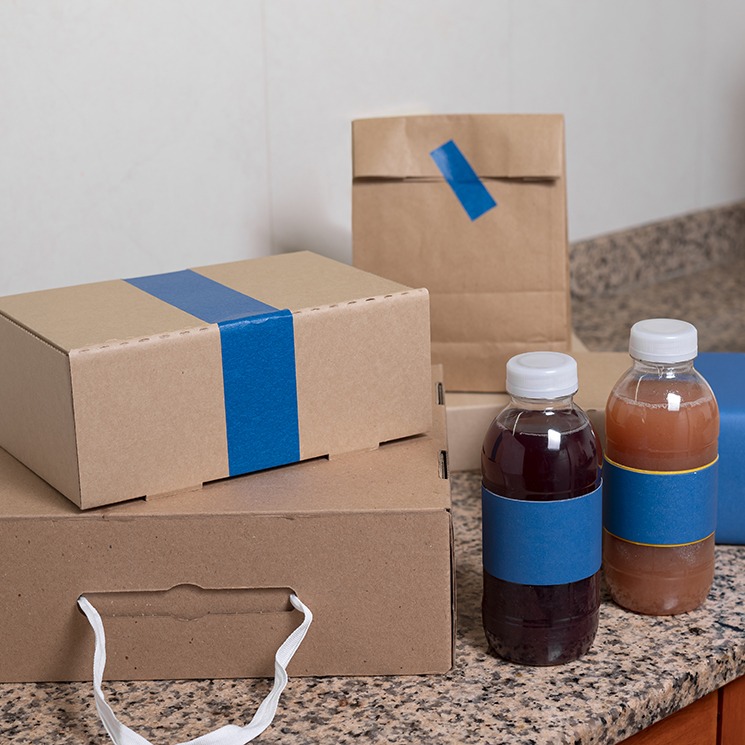
Packaging is often discussed as a single function, but in practice it operates as a system. From the point of filling to the point of sale and through to final delivery, different packaging layers perform different roles. Primary packaging, secondary packaging, and transit packaging each carry specific responsibilities, and the overall efficiency of the supply chain depends on how well those layers work together.
For manufacturers and brand owners, this is not just a design matter. It is an operational decision that affects product protection, line efficiency, storage, transport, retail presentation, and customer experience. When one layer underperforms, the entire packaging system feels the impact.
Primary Packaging Must Protect the Product and Support Use
Primary packaging is the layer that comes into direct contact with the product. In sectors such as food, beverages, personal care, pharmaceuticals, and household products, this is the most critical packaging interface. It must protect product integrity, preserve shelf life, maintain hygiene standards, and provide ease of use for the consumer.
The expectations from primary packaging are both technical and commercial. It needs to offer barrier performance where required, maintain dimensional consistency on filling lines, support closure fitment, and deliver a reliable pack structure through storage and handling. At the same time, it must also support brand presentation on shelf.
In practical terms, primary packaging must do three things well. It must keep the product safe, run efficiently in production, and remain functional in the hands of the end user. If it fails in any one of these areas, the cost is immediate, whether through leakage, contamination, rejection, or brand damage.
Secondary Packaging Must Group, Protect and Present
Secondary packaging sits around the primary pack. Its role is to group units together, improve handling, add another layer of protection, and support merchandising or distribution requirements. This includes formats such as cartons, shrink bundles, sleeves, trays, and wrap-around solutions depending on the product category and route to market.
Strong secondary packaging helps create order in the supply chain. It allows primary packs to move as consolidated units, improves ease of stacking, and reduces the risk of damage during internal movement and retail handling. It can also play a significant role in shelf-ready presentation, especially in modern trade environments where replenishment speed and pack visibility matter.
From a manufacturing perspective, secondary packaging must also be machine compatible and structurally stable. It should support efficient packing operations without creating unnecessary complexity. A well-designed secondary pack reduces handling inefficiencies and protects the primary pack from avoidable stress before it reaches the consumer.
Transit Packaging Must Withstand Movement Across the Supply Chain
Transit packaging is the outermost packaging layer used for warehousing, palletisation, transport, and distribution. Its job is straightforward but demanding. It must protect the packaged goods through stacking, loading, unloading, long-distance transport, and changing storage conditions.
This is where transit packaging becomes a serious supply chain tool rather than a simple outer cover. It must deliver compression strength, load stability, impact resistance, and handling efficiency. Stretch wrap, shrink film, corrugated boxes, pallet covers, and other transport-oriented materials all fall into this category depending on the movement requirement.
A failure at the transit stage can erase the value created by the inner packaging layers. Even if the primary and secondary packaging are well engineered, poor transit protection can still result in crushed packs, leakage, scuffing, contamination, or product loss. That is why transit packaging should be evaluated in line with route conditions, storage patterns, shipping distances, and pallet configuration rather than treated as an afterthought.
Each Layer Has a Different Job, but They Must Work as One System
One of the most common mistakes in packaging development is assessing each layer in isolation. In reality, packaging performs best when all three layers are developed as part of one integrated system. The primary pack must suit the product and production line. The secondary pack must support handling and grouping. The transit pack must protect the load through the distribution chain.
When these layers are aligned, the business benefits are clear. Filling lines run more smoothly. Damage rates stay lower. Warehousing becomes more efficient. Transport loads become more stable. Retail handling improves. The product reaches the market in better condition and at lower operational cost.
This systems approach is especially important for high-volume sectors where even small improvements in pack performance can influence total supply chain economics. Packaging decisions should therefore be based not only on material cost, but on total delivered value.
Performance, Efficiency and Practicality Must Be Balanced
Every packaging layer brings trade-offs. Stronger materials may improve protection but add cost or weight. More visually appealing secondary formats may improve shelf presence but reduce packing speed. Lighter transit solutions may save material but increase the risk of transport damage if not properly engineered.
The right packaging strategy balances these factors with a clear view of product requirements, distribution conditions, and commercial priorities. That is why businesses increasingly look for packaging partners who understand not just individual components, but the full packaging architecture.
In industrial terms, the goal is simple. Each layer must perform its role without creating inefficiency for the next stage. Good packaging is not only about containment. It is about convertibility, stackability, transport stability, and consistent delivery across the supply chain.
Packaging Performance Should Be Measured Across the Full Journey
The effectiveness of packaging cannot be judged only at the filling line or only at the point of sale. It needs to be assessed across the entire product journey. That includes machine performance, storage conditions, transport stress, retail handling, and end-user interaction.
For this reason, packaging protection should be measured across all three levels. Primary packaging must protect the product itself. Secondary packaging must support grouping and handling. Transit packaging must protect the load in motion. Each level adds a layer of assurance, and each one contributes to overall supply chain reliability.
Conclusion
Primary packaging, secondary packaging, and transit packaging each serve a distinct purpose, but none of them can be treated in isolation. Together, they determine how well a product is protected, handled, transported, displayed, and delivered.
For brands and manufacturers, the priority should not be to optimise one layer at the expense of the others. It should be to build a packaging system in which every layer delivers what the next stage needs. That is how packaging moves from being a cost centre to becoming a performance driver across production, logistics, and market execution.