
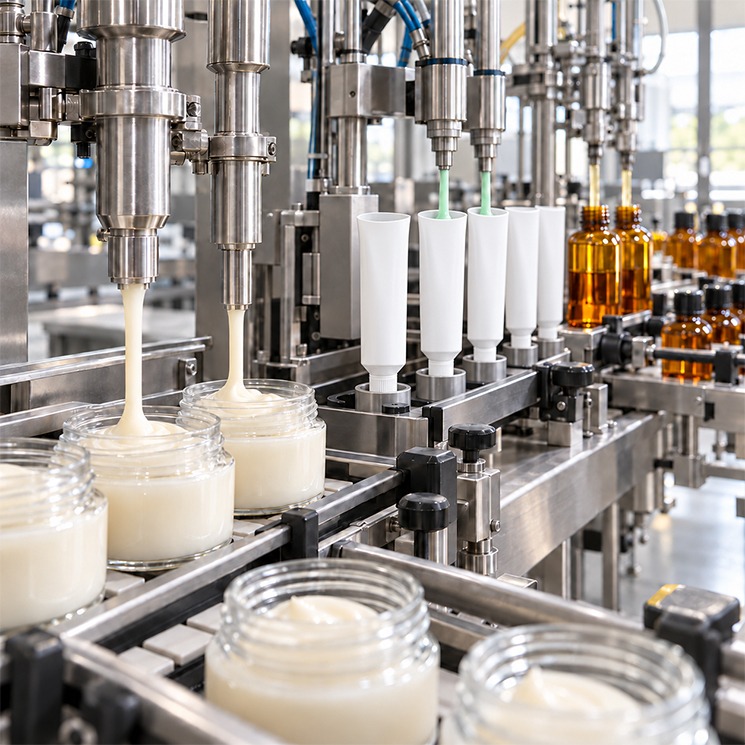
When launching a new product, packaging decisions often begin with a simple question:
Should we use a bottle, jar or tube?
There is no universal answer.
The right packaging format depends on the product, how it is used, how it needs to be dispensed, how it will be filled and how it will move through the supply chain.
The packaging format should therefore be selected around the product — not simply around what looks attractive on the shelf.
Start With the Product
The first question should be:
What does the product need from its packaging?
A liquid, cream, gel or thicker formulation may require different dispensing and access methods.
The product’s characteristics can influence:
* Container format
* Opening size
* Dispensing method
* Closure type
* Material
* Capacity
* Filling requirements
This is why packaging development normally starts with understanding the product and its intended use.
When Does a Bottle Make Sense?
Bottles are widely used across industries because they can accommodate different products, capacities, shapes and dispensing systems.
Depending on the application, a bottle may be paired with:
* Screw closures
* Flip-top closures
* Pumps
* Sprayers
* Other dispensing systems
Chemco’s portfolio includes bottles across multiple applications and industries, including pharmaceutical packaging in different shapes and capacities.
The flexibility of the format makes bottles suitable for a wide range of products, but the specific design still needs to match the application.
When Does a Jar Make Sense?
Jars provide a wider opening than many bottle formats.
This can be useful where the product needs to be accessed directly from the container, particularly for certain thicker formulations.
The wider opening can influence both product access and consumer interaction.
However, brands still need to consider:
* Product compatibility
* Closure and sealing
* Filling process
* Storage
* Transportation
* Consumer use
A jar should therefore be selected because its format suits the product, not simply because the product has a high viscosity.
When Does a Tube Make Sense?
Tubes provide a different dispensing experience.
Their flexible structure allows the consumer to squeeze the package to dispense the product through an opening or closure.
This can make tubes suitable for certain personal care, cosmetic and topical applications.
However, tube selection also needs to consider the product, closure, filling process, material and intended use.
The Closure Changes the Experience
The primary container and closure need to work as one system.
A bottle with a pump creates a very different dispensing experience from a bottle with a screw cap.
Likewise, a jar requires a closure that provides the appropriate fit and sealing performance.
Chemco’s product portfolio includes both containers and jars as well as caps and closures, reflecting the importance of considering packaging components together.
What About the Filling Line?
Packaging needs to work before it reaches the consumer.
The selected format needs to be compatible with the filling, capping and handling processes used by the brand or contract manufacturer.
A package that looks right but performs poorly on the production line can create avoidable operational challenges.
Brands should therefore consider:
* Container handling
* Filling method
* Closure application
* Production speed
* Line compatibility
* Quality control
Think Beyond the Shelf
The packaging journey does not end after filling.
Containers may need to be:
Manufactured → Filled → Capped → Packed → Stored → Transported → Displayed → Used
Each stage can place different requirements on the packaging.
This is why a good packaging decision considers the complete product journey.
So, which format should a brand choose?
There is no universal winner between a bottle, jar and tube.
The better question is:
Which format best matches the product, dispensing requirement, manufacturing process, supply chain and consumer use?
That is the decision that should guide packaging development.
The Chemco Perspective
Chemco works across a wide range of packaging formats, including PET preforms, bottles, containers and jars, caps and closures and other packaging solutions.
The right packaging format is therefore not simply a matter of shape.
It is a balance between product requirements, functionality, manufacturing and the way consumers ultimately use the package.