
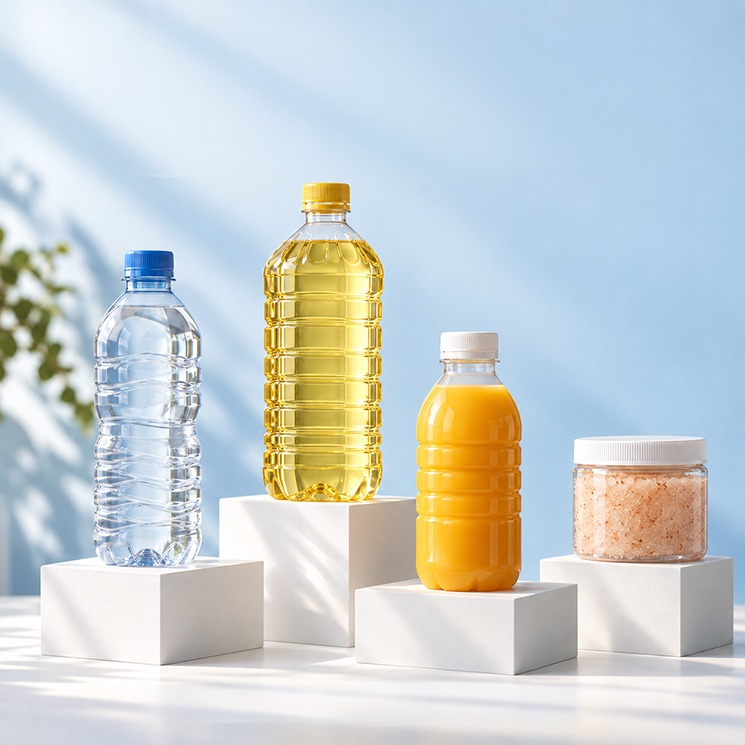
When we talk about packaging, we often focus on things we can easily see — the bottle shape, colour, size or design.
But packaging also has an important job that we cannot see: protecting what is inside.
This is where barrier properties come into the picture.
That’s why, in our PET Basics series, we are breaking down another important concept in packaging — what barrier properties mean, what they protect against, and why they matter when choosing the right packaging for a product.
What Are Barrier Properties?
In simple terms, barrier properties describe how well a packaging material prevents or slows down the movement of substances through it.
These substances can include:
- Oxygen
- Carbon dioxide
- Water vapour
- Moisture
- Aromas and other gases
- Light, depending on the packaging structure
Think of the packaging as a protective wall around the product.
A good barrier helps control what enters or leaves the package, helping maintain the product’s quality during storage, transportation and use.
The level of barrier required depends on the product.
A bottle designed for drinking water, for example, may have very different packaging requirements from one used for a product that is sensitive to oxygen or moisture.
Why Do Barrier Properties Matter?
Packaging is not only there to hold a product. It also needs to help protect it throughout its shelf life.
If unwanted gases or moisture pass through the packaging too easily, they can affect the product inside.
Depending on the application, this can lead to:
- Changes in taste or aroma
- Loss of carbonation
- Oxidation
- Moisture gain or loss
- Reduced product quality
- Shorter shelf life
This is why packaging needs to be selected based on the product’s actual requirements, rather than simply its appearance or cost.
What Does PET Offer?
PET, or Polyethylene Terephthalate, is widely used for bottles and containers because it offers a useful combination of properties, including strength, transparency, lightweighting potential and recyclability.
It also provides barrier performance for many common packaging applications.
However, it is important to remember that PET is not a universal barrier material for every product.
The level of protection required can vary depending on:
- The product being packed
- Expected shelf life
- Storage conditions
- Temperature
- Packaging size and design
- Bottle wall thickness
- Closure system
- Distribution conditions
For some applications, standard PET may provide the required performance. For more sensitive products, additional barrier solutions or different packaging structures may need to be considered.
Barrier Properties Are Not the Same for Every Product
One of the easiest mistakes in packaging is assuming that one bottle design will work equally well for every application.
It won’t.
Consider three different products:
- Water: The primary requirement may be a lightweight, durable bottle that maintains product integrity during storage and distribution.
- Carbonated beverages: The packaging needs to retain carbon dioxide while also handling the pressure created by carbonation.
- Oxygen-sensitive products: The packaging may need stronger oxygen protection to help maintain product quality over its intended shelf life.
The product therefore needs to be considered first, and the packaging should be designed around those requirements.
What Can Affect Barrier Performance?
Barrier performance is influenced by more than just the material itself.
Several factors can play a role.
1. Material Structure
The molecular structure and characteristics of the packaging material influence how easily gases and moisture can pass through it.
2. Wall Thickness
In general, a thicker packaging wall can provide greater resistance to permeation. However, increasing thickness is not always the best solution, particularly when brands are working towards lightweight packaging.
The objective is to achieve the required performance without unnecessary material use.
3. Bottle Design
The overall design and geometry of the bottle can influence its performance.
This is one reason why packaging development should consider the product, bottle design and manufacturing process together.
4. Temperature
Storage and distribution temperatures can affect the movement of gases and moisture through packaging.
A packaging solution that performs well under one set of conditions may need to be evaluated differently when exposed to higher temperatures or changing environments.
5. Closures and Sealing
The bottle is only one part of the packaging system.
The closure and seal also play an important role in protecting the product. Even a well-designed bottle can have performance issues if the closure does not provide an effective seal.
How Is Barrier Performance Evaluated?
Barrier performance is influenced by more than just the material itself.
Barrier properties can be evaluated using specific testing methods depending on what needs to be measured.
Two commonly discussed measurements are:
- Oxygen Transmission Rate (OTR): Measures how much oxygen passes through a packaging material over a defined period.
- Water Vapour Transmission Rate (WVTR): Measures the amount of water vapour that passes through the material under defined conditions.
These measurements help packaging professionals understand how a material is likely to perform for a particular application.
The important point is that there is no single “best” barrier level.
The right level depends on what the product needs.
Can PET Packaging Be Designed for Better Barrier Performance?
Yes, depending on the application.
Packaging manufacturers can look at factors such as material selection, bottle design, wall distribution, weight and manufacturing conditions when developing a packaging solution.
For more demanding applications, barrier technologies or multilayer structures may also be considered.
However, adding more material or more layers is not automatically the answer.
A good packaging solution balances product protection, performance, manufacturability, cost and sustainability.
This is particularly important as brands continue to look for ways to reduce packaging weight without compromising product quality.
Why Should Brand Owners Care?
Barrier properties may sound like a highly technical subject, but they have a very practical impact.
Understanding barrier requirements can help brands:
- Select packaging suited to their product
- Protect product quality during its shelf life
- Avoid unnecessary material usage
- Evaluate packaging performance more effectively
- Make better decisions around bottle design and materials
- Reduce the risk of packaging-related product losses
Instead of asking, “Which bottle is best?”, it is often more useful to ask:
“What does my product need the packaging to protect it from?”
That question can lead to a much better packaging decision.
The Chemco Perspective
At Chemco, packaging development starts with understanding the application.
Different products require different packaging solutions, which is why preform design, bottle design, material selection and manufacturing conditions all need to work together.
Chemco manufactures PET preforms for a wide range of applications, including water, carbonated beverages, juices, dairy, edible oil, pharmaceuticals and cosmetics. Its preform portfolio includes more than 1,500 variants across different neck finishes, weights and applications.
For brands, understanding technical properties such as barrier performance is one more step towards making better packaging decisions.
Because good packaging is not simply about what the bottle looks like.
It is about how well it performs for the product inside.
Stay tuned as we continue PET Basics, breaking down the science behind PET packaging — one concept at a time.