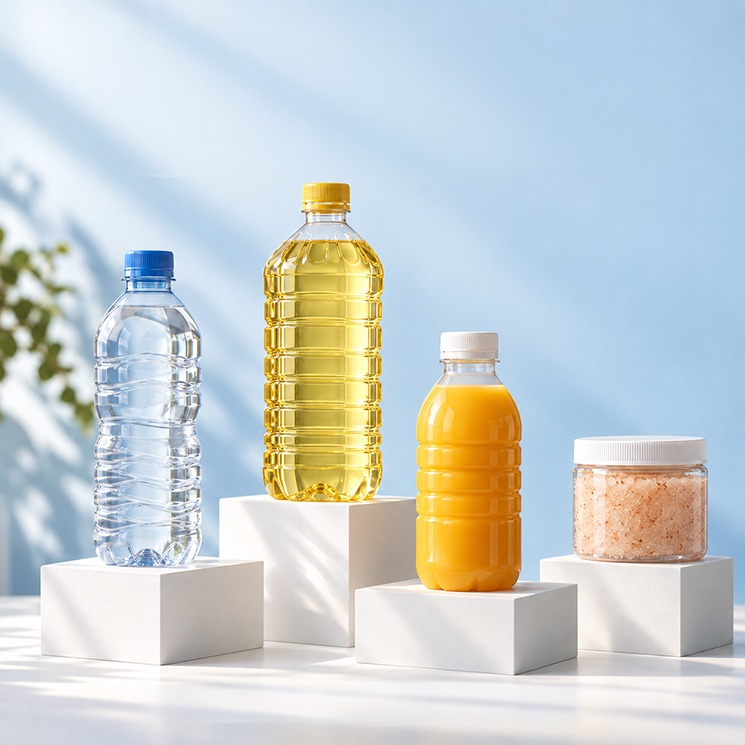
Bottle, Jar or Tube? How Should Brands Choose the Right Packaging Format?

When launching a new product, packaging decisions often begin with a simple question:

Should we use a bottle, jar or tube?

There is no universal answer.

The right packaging format depends on the product, how it is used, how it needs to be dispensed, how it will be filled and how it will move through the supply chain.

The packaging format should therefore be selected around the product — not simply around what looks attractive on the shelf.

Start With the Product

The first question should be:

What does the product need from its packaging?

A liquid, cream, gel or thicker formulation may require different dispensing and access methods.

The product’s characteristics can influence:

* Container format
* Opening size
* Dispensing method
* Closure type
* Material
* Capacity
* Filling requirements

This is why packaging development normally starts with understanding the product and its intended use.

When Does a Bottle Make Sense?

Bottles are widely used across industries because they can accommodate different products, capacities, shapes and dispensing systems.

Depending on the application, a bottle may be paired with:

* Screw closures
* Flip-top closures
* Pumps
* Sprayers
* Other dispensing systems

Chemco’s portfolio includes bottles across multiple applications and industries, including pharmaceutical packaging in different shapes and capacities.

The flexibility of the format makes bottles suitable for a wide range of products, but the specific design still needs to match the application.

When Does a Jar Make Sense?

Jars provide a wider opening than many bottle formats.

This can be useful where the product needs to be accessed directly from the container, particularly for certain thicker formulations.

The wider opening can influence both product access and consumer interaction.

However, brands still need to consider:

* Product compatibility
* Closure and sealing
* Filling process
* Storage
* Transportation
* Consumer use

A jar should therefore be selected because its format suits the product, not simply because the product has a high viscosity.

When Does a Tube Make Sense?

Tubes provide a different dispensing experience.

Their flexible structure allows the consumer to squeeze the package to dispense the product through an opening or closure.

This can make tubes suitable for certain personal care, cosmetic and topical applications.

However, tube selection also needs to consider the product, closure, filling process, material and intended use.

The Closure Changes the Experience

The primary container and closure need to work as one system.

A bottle with a pump creates a very different dispensing experience from a bottle with a screw cap.

Likewise, a jar requires a closure that provides the appropriate fit and sealing performance.

Chemco’s product portfolio includes both containers and jars as well as caps and closures, reflecting the importance of considering packaging components together.

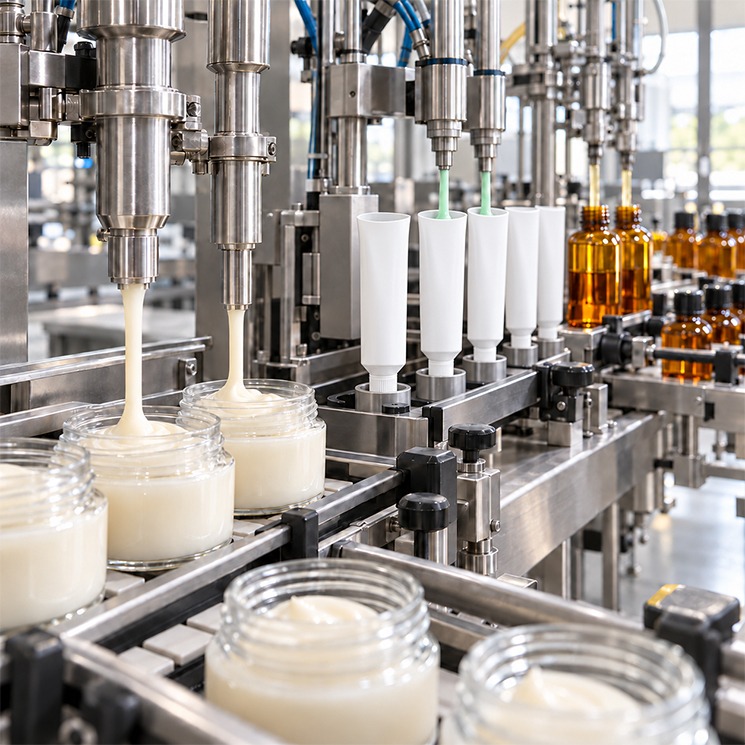
What About the Filling Line?

Packaging needs to work before it reaches the consumer.

The selected format needs to be compatible with the filling, capping and handling processes used by the brand or contract manufacturer.

A package that looks right but performs poorly on the production line can create avoidable operational challenges.

Brands should therefore consider:

* Container handling
* Filling method
* Closure application
* Production speed
* Line compatibility
* Quality control

Think Beyond the Shelf

The packaging journey does not end after filling.

Containers may need to be:

Manufactured → Filled → Capped → Packed → Stored → Transported → Displayed → Used

Each stage can place different requirements on the packaging.

This is why a good packaging decision considers the complete product journey.

So, which format should a brand choose?

There is no universal winner between a bottle, jar and tube.

The better question is:

Which format best matches the product, dispensing requirement, manufacturing process, supply chain and consumer use?

That is the decision that should guide packaging development.

The Chemco Perspective

Chemco works across a wide range of packaging formats, including PET preforms, bottles, containers and jars, caps and closures and other packaging solutions.

The right packaging format is therefore not simply a matter of shape.

It is a balance between product requirements, functionality, manufacturing and the way consumers ultimately use the package.

Driving India’s Circular Transition: Chemco Honored at the CII Sustainable Plastic Packaging Awards 2026

At Chemco, we have always operated under a clear conviction: plastic packaging is not inherently problematic—the challenge lies in how we design, manage, and re-integrate materials into the value chain. Translating circular economy principles into industry standards requires moving beyond corporate commitments to deliver scalable, high-performance packaging engineering.

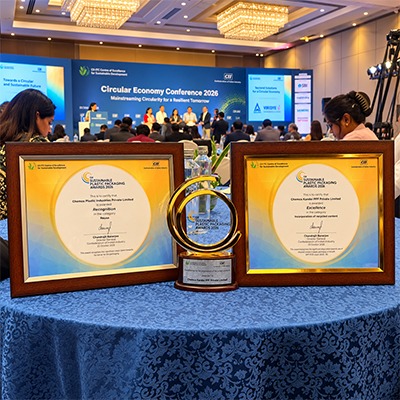
We are proud to announce that Chemco has been awarded two prestigious honors at the CII Sustainable Plastic Packaging Awards 2026!

Organized by the CII-ITC Centre of Excellence for Sustainable Development, the awards ceremony took place during the CII Circular Economy Conference 2026 (Mainstreaming Circular Economy) on October 22, 2026, at Le Méridien, New Delhi.

The accolades were proudly accepted on behalf of the company by Mr. Sachin Sabharwal, Head – Sales & Strategic Operations.

Recognized for Industry-Leading Innovations in Recycled Content & Reuse

The CII Sustainable Plastic Packaging Awards recognize pioneering design improvements and operational strategies that drive the transition toward a circular packaging ecosystem across India. Securing honors across both recycled material integration and multi-loop product reuse highlights Chemco’s multi-layered strategy for closing the loop.

1. Excellence Award | Incorporation of Recycled Content Category

Awardee: Chemco Kandoi rPET

Category Focus: Incorporation of Recycled Content (rPET FIBC Bags)

Flexible Intermediate Bulk Containers (FIBC) or industrial bulk bags are indispensable across global supply chains, but they have traditionally relied entirely on virgin polymers. Through Chemco Kandoi rPET, we successfully engineered post-consumer recycled PET (rPET) into heavy-duty woven bulk packaging.

By processing post-consumer PET bottle waste into high-tensile rPET tapes, we have proven that structural integrity, seam strength, and strict safety metrics can coexist with recycled post-consumer waste. This breakthrough allows B2B bulk buyers to significantly slash their supply chain carbon footprint without compromising performance.

2. Recognition Award | Reuse Category

Awardee: Chemco Plastic Industries

Category Focus: Reuse Category (4R Packaging Framework)

Recycling is only one half of the circular equation; extending the lifespan of packaging in active use is just as vital. Chemco Plastic Industries was honored for its 4R Packaging framework (Reduce, Reuse, Recycle, Redesign), featuring heavy-duty reusable transit containers and rigid packaging engineered to replace single-use formats.

Designed with enhanced structural durability, moisture resistance, and high compression strength, 4R packaging survives multiple logistics loops. These solutions can be safely collapsed, returned, and reused across supply chains—dramatically reducing multi-trip packaging waste and overall operational impacts.

Mainstreaming Circular Solutions Across Industrial Supply Chains

The central focus of this year’s CII conference—“Mainstreaming Circular Economy”—emphasized moving circular business models from isolated pilots into full-scale industrial execution.

As Extended Producer Responsibility (EPR) guidelines and global sustainability benchmarks continue to shape manufacturing, Chemco remains committed to practical, market-ready engineering. From high-grade rPET woven fabrics to returnable transit packaging, our teams manufacture solutions that protect your products while safeguarding the environment.

Partnering for a Sustainable Tomorrow

We extend our sincere appreciation to the Confederation of Indian Industry (CII), the panel of judges, our dedicated operational and R&D teams, and our valued industry partners who join us in advancing circular packaging standards.

Whether your organization is looking to integrate certified post-consumer rPET into bulk packaging, transition to returnable transit containers, or meet strict corporate sustainability goals, Chemco has the technical expertise and capacity to help you deliver.

Contact our packaging specialists today (https://www.chemcogroup.com/contact/) to learn more about our award-winning rPET FIBC bags and 4R packaging solutions.

PET Basics: What Are Barrier Properties and Why Do They Matter in Packaging?

When we talk about packaging, we often focus on things we can easily see — the bottle shape, colour, size or design.

But packaging also has an important job that we cannot see: protecting what is inside.

This is where barrier properties come into the picture.

That’s why, in our PET Basics series, we are breaking down another important concept in packaging — what barrier properties mean, what they protect against, and why they matter when choosing the right packaging for a product.

What Are Barrier Properties?

In simple terms, barrier properties describe how well a packaging material prevents or slows down the movement of substances through it.

These substances can include:

  • Oxygen
  • Carbon dioxide
  • Water vapour
  • Moisture
  • Aromas and other gases
  • Light, depending on the packaging structure

Think of the packaging as a protective wall around the product.

A good barrier helps control what enters or leaves the package, helping maintain the product’s quality during storage, transportation and use.

The level of barrier required depends on the product.

A bottle designed for drinking water, for example, may have very different packaging requirements from one used for a product that is sensitive to oxygen or moisture.

Why Do Barrier Properties Matter?

Packaging is not only there to hold a product. It also needs to help protect it throughout its shelf life.

If unwanted gases or moisture pass through the packaging too easily, they can affect the product inside.

Depending on the application, this can lead to:

  • Changes in taste or aroma
  • Loss of carbonation
  • Oxidation
  • Moisture gain or loss
  • Reduced product quality
  • Shorter shelf life

This is why packaging needs to be selected based on the product’s actual requirements, rather than simply its appearance or cost.

What Does PET Offer?

PET, or Polyethylene Terephthalate, is widely used for bottles and containers because it offers a useful combination of properties, including strength, transparency, lightweighting potential and recyclability.

It also provides barrier performance for many common packaging applications.

However, it is important to remember that PET is not a universal barrier material for every product.

The level of protection required can vary depending on:

  • The product being packed
  • Expected shelf life
  • Storage conditions
  • Temperature
  • Packaging size and design
  • Bottle wall thickness
  • Closure system
  • Distribution conditions

For some applications, standard PET may provide the required performance. For more sensitive products, additional barrier solutions or different packaging structures may need to be considered.

Barrier Properties Are Not the Same for Every Product

One of the easiest mistakes in packaging is assuming that one bottle design will work equally well for every application.

It won’t.

Consider three different products:

  • Water: The primary requirement may be a lightweight, durable bottle that maintains product integrity during storage and distribution.
  • Carbonated beverages: The packaging needs to retain carbon dioxide while also handling the pressure created by carbonation.
  • Oxygen-sensitive products: The packaging may need stronger oxygen protection to help maintain product quality over its intended shelf life.

The product therefore needs to be considered first, and the packaging should be designed around those requirements.

What Can Affect Barrier Performance?

Barrier performance is influenced by more than just the material itself.

Several factors can play a role.

1. Material Structure
The molecular structure and characteristics of the packaging material influence how easily gases and moisture can pass through it.

2. Wall Thickness
In general, a thicker packaging wall can provide greater resistance to permeation. However, increasing thickness is not always the best solution, particularly when brands are working towards lightweight packaging.

The objective is to achieve the required performance without unnecessary material use.

3. Bottle Design
The overall design and geometry of the bottle can influence its performance.

This is one reason why packaging development should consider the product, bottle design and manufacturing process together.

4. Temperature

Storage and distribution temperatures can affect the movement of gases and moisture through packaging.

A packaging solution that performs well under one set of conditions may need to be evaluated differently when exposed to higher temperatures or changing environments.

5. Closures and Sealing

The bottle is only one part of the packaging system.

The closure and seal also play an important role in protecting the product. Even a well-designed bottle can have performance issues if the closure does not provide an effective seal.

How Is Barrier Performance Evaluated?

Barrier performance is influenced by more than just the material itself.
Barrier properties can be evaluated using specific testing methods depending on what needs to be measured.

Two commonly discussed measurements are:

  • Oxygen Transmission Rate (OTR): Measures how much oxygen passes through a packaging material over a defined period.
  • Water Vapour Transmission Rate (WVTR): Measures the amount of water vapour that passes through the material under defined conditions.

These measurements help packaging professionals understand how a material is likely to perform for a particular application.

The important point is that there is no single “best” barrier level.

The right level depends on what the product needs.

Can PET Packaging Be Designed for Better Barrier Performance?

Yes, depending on the application.

Packaging manufacturers can look at factors such as material selection, bottle design, wall distribution, weight and manufacturing conditions when developing a packaging solution.

For more demanding applications, barrier technologies or multilayer structures may also be considered.

However, adding more material or more layers is not automatically the answer.

A good packaging solution balances product protection, performance, manufacturability, cost and sustainability.

This is particularly important as brands continue to look for ways to reduce packaging weight without compromising product quality.

Why Should Brand Owners Care?

Barrier properties may sound like a highly technical subject, but they have a very practical impact.

Understanding barrier requirements can help brands:

  • Select packaging suited to their product
  • Protect product quality during its shelf life
  • Avoid unnecessary material usage
  • Evaluate packaging performance more effectively
  • Make better decisions around bottle design and materials
  • Reduce the risk of packaging-related product losses

Instead of asking, “Which bottle is best?”, it is often more useful to ask:

“What does my product need the packaging to protect it from?”

That question can lead to a much better packaging decision.

The Chemco Perspective

At Chemco, packaging development starts with understanding the application.

Different products require different packaging solutions, which is why preform design, bottle design, material selection and manufacturing conditions all need to work together.

Chemco manufactures PET preforms for a wide range of applications, including water, carbonated beverages, juices, dairy, edible oil, pharmaceuticals and cosmetics. Its preform portfolio includes more than 1,500 variants across different neck finishes, weights and applications.

For brands, understanding technical properties such as barrier performance is one more step towards making better packaging decisions.

Because good packaging is not simply about what the bottle looks like.

It is about how well it performs for the product inside.

Stay tuned as we continue PET Basics, breaking down the science behind PET packaging — one concept at a time.