
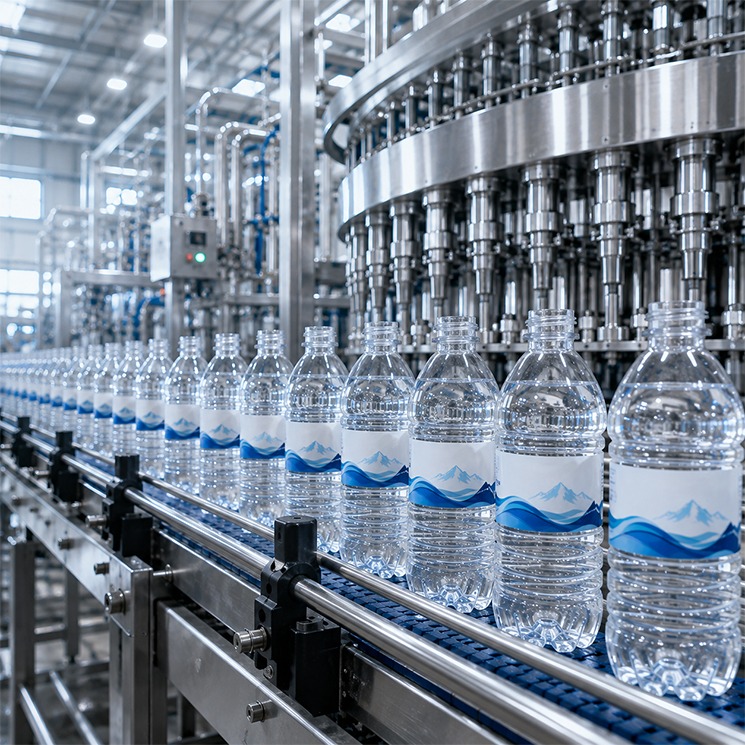
Bottled water is one of the largest applications of PET packaging worldwide. While a PET water bottle may appear simple, its design is the result of careful engineering, material selection, and manufacturing expertise.
A well-designed bottle must do much more than hold water. It needs to perform consistently on high-speed filling lines, withstand transportation and storage, protect product quality, support brand identity, and align with evolving sustainability expectations.
For drinking water brands, every design decision—from the PET preform to the bottle geometry and closure compatibility—can influence production efficiency, logistics performance, consumer experience, and overall packaging costs.
In this blog, we’ll explore the key factors that make a great PET water bottle and why they matter throughout the packaging lifecycle.
1. It All Begins with a High-Quality PET Preform
Every PET bottle starts as a PET preform, making it the foundation of the finished package.
The quality of the preform directly influences the bottle’s performance during stretch blow moulding and beyond. Factors such as dimensional consistency, weight accuracy, material distribution and processing quality all contribute to the final bottle’s appearance, mechanical properties and processing efficiency.
A precision-engineered preform helps manufacturers achieve:
- Consistent bottle quality
- Stable blow moulding performance
- Better material distribution
- Reduced production rejects
- Improved manufacturing efficiency
For drinking water brands, selecting the right PET preform supplier is the first step towards ensuring reliable packaging performance.
2. Lightweighting Should Never Compromise Performance
Lightweighting has become an important objective for bottled water manufacturers as they seek to improve material efficiency and optimise packaging costs.
However, reducing bottle weight should never come at the expense of performance.
A well-engineered bottle should deliver the right balance between material utilisation and structural strength by offering:
- Adequate top-load strength
- Resistance to deformation during handling
- Reliable performance during transportation
- Efficient material utilisation
- Consistent bottle performance across production batches
Successful lightweighting is achieved through intelligent bottle design and precision preform engineering—not simply by reducing material.
3. Neck Finish and Closure Compatibility Are Critical
The neck finish is one of the most important features of a PET bottle, yet it is often overlooked.
It determines compatibility with the closure and directly affects sealing performance, production efficiency and consumer experience.
A properly designed neck finish helps ensure:
- Secure sealing
- Leak resistance
- Consistent capping performance
- Compatibility with high-speed filling lines
- Reliable consumer convenience
Even minor dimensional variations can lead to leakage, capping issues or production downtime.
4. Bottle Design Must Support High-Speed Manufacturing
Modern bottled water facilities operate at extremely high production speeds, making bottle design a critical factor in manufacturing efficiency.
An optimised PET bottle should perform consistently across every stage of production, including:
- Stretch blow moulding
- Air conveying systems
- Filling operations
- Capping
- Labelling
- Secondary packaging
Packaging that is designed for process stability helps reduce downtime, minimise rejects and improve overall equipment efficiency.
5. Structural Performance Matters Throughout the Supply Chain
A PET bottle must continue performing long after it leaves the production line.
Throughout its journey, it is subjected to palletisation, warehousing, transportation, distribution and retail handling.
Bottle design should therefore provide:
- Adequate top-load strength
- Dimensional stability
- Resistance to panel deformation
- Reliable stacking performance
- Consistent performance throughout distribution
These characteristics help protect product quality while reducing the risk of damage across the supply chain.
6. Shelf Appeal Supports Brand Differentiation
Performance is essential—but so is presentation.
For bottled water, packaging is often the first point of interaction between the brand and the consumer. Bottle shape, clarity, proportions, label panel design and overall aesthetics all contribute to how a brand is perceived.
An effective bottle design should:
- Enhance shelf presence
- Strengthen brand recognition
- Support premium product positioning
- Differentiate the product in a competitive market
Successful packaging combines engineering excellence with thoughtful design.
7. Sustainability Begins at the Design Stage
As sustainability expectations continue to grow, packaging design is evolving alongside them.
Today’s drinking water brands are increasingly focusing on packaging solutions that support responsible resource utilisation while maintaining performance.
Key considerations include:
- Lightweight bottle designs
- Designing for recyclability
- Efficient material utilisation
- Incorporating recycled PET (rPET), where appropriate and compliant with applicable regulations
Sustainability is most effective when considered during product development rather than after production.
Why These Factors Matter
A high-performing PET water bottle is the result of multiple engineering decisions working together.
From PET preform quality and bottle design to closure compatibility and manufacturing efficiency, every detail influences:
- Production performance
- Product protection
- Operational efficiency
- Supply chain reliability
- Brand perception
Looking beyond the finished bottle allows brands to develop packaging solutions that deliver long-term value across the entire product lifecycle.
Final Thoughts
A great PET water bottle is far more than a container—it’s a precision-engineered packaging solution designed to meet the demands of modern manufacturing, distribution and consumer use.
For drinking water brands, investing in the right PET preform, bottle design and manufacturing expertise can improve operational efficiency, enhance product quality and strengthen brand performance.
At Chemco Group, we understand that exceptional bottles begin with precision-engineered PET preforms. By combining technical expertise, consistent manufacturing and application-driven design, we help brands develop PET packaging solutions that deliver reliable performance from production to the consumer.