
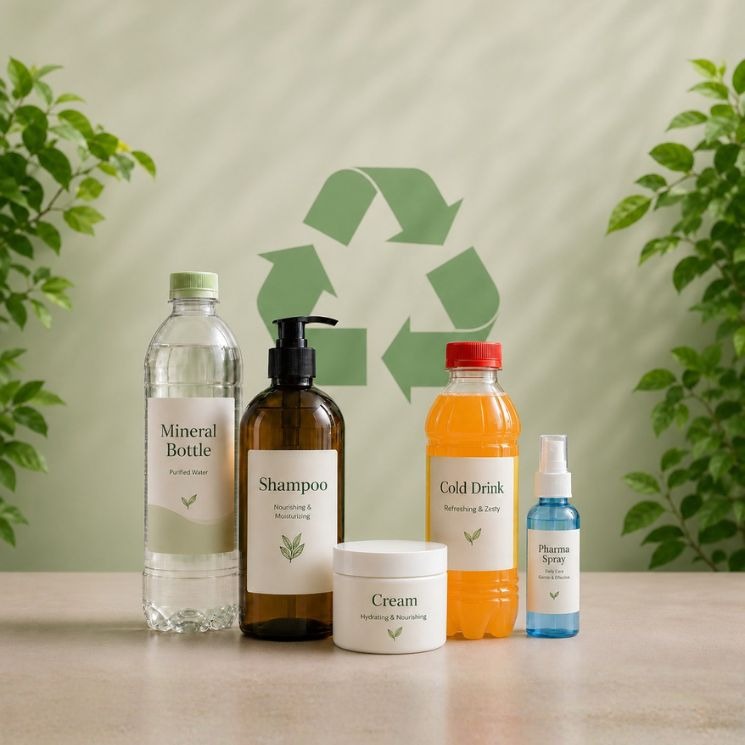
As sustainability regulations and circular economy goals continue to evolve, packaging design is becoming increasingly important in determining how effectively materials can be collected, sorted, and recycled.
Today, packaging is no longer designed only for aesthetics, branding, or product protection — it is also being designed for recyclability and long-term environmental impact.
For businesses across FMCG, food & beverage, pharmaceuticals, and personal care industries, design for recyclability is becoming an essential part of sustainable packaging strategy.
Understanding Design for Recyclability
Design for recyclability refers to creating packaging structures that existing recycling systems can efficiently collect, sort, process, and recycle.
The goal is to ensure that packaging materials remain compatible with circular economy processes and do not create unnecessary recycling challenges.
This includes considerations related to:
- Material selection
- Packaging structure
- Labels and adhesives
- Color usage
- Cap and closure compatibility
- Multi-layer packaging complexity
Packaging that is easier to recycle contributes directly to improved recovery rates and reduced environmental impact.
Why Recyclability Is Becoming a Major Industry Priority
Governments, regulatory bodies, and consumers are placing increasing pressure on businesses to improve packaging sustainability.
Modern sustainability regulations are focusing not only on recyclable materials but also on whether packaging is realistically recyclable within available infrastructure.
As a result, businesses are increasingly shifting toward packaging systems that support:
- Efficient material recovery
- Circular economy goals
- Reduced landfill waste
- Higher recycled content integration
- Improved sustainability compliance
This shift is encouraging packaging manufacturers and brand owners to rethink packaging development from the very beginning of the design process.
The Role of Labels, Colors & Closures in Recyclability
Packaging components such as labels, adhesives, sleeves, and closures can significantly impact recyclability.
Certain packaging elements may interfere with:
- Optical sorting system
- Material identification
- Recycling quality
- Reprocessing efficiency
As a result, businesses are increasingly focusing on:
- Recyclable labels
- Compatible adhesives
- Clear PET structures
- Simplified packaging designs
- Closure compatibility
These design decisions help improve recycling performance and support higher-quality recycled material output.
PET Packaging & Circular Economy Compatibility
PET continues to remain one of the most widely recycled packaging materials globally due to its strong compatibility with circular economy systems.
PET packaging offers several advantages including:
- High recyclability
- Lightweight structure
- Strong material recovery value
- Recycled content integration potential
- Durability and packaging performance
With growing investments in recycling infrastructure and food-grade rPET technologies, PET packaging continues to support the transition toward more sustainable packaging ecosystems.
Aligning Packaging Design with Future Regulations
As EPR obligations and recycled content mandates continue to increase, packaging design decisions will play a major role in regulatory readiness.
Businesses are now expected to develop packaging solutions that support:
- Efficient recyclability
- Sustainable material usage
- Reduced environmental impact
- Circular packaging systems
- Improved traceability
Design for recyclability is no longer just a sustainability initiative — it is becoming a business and compliance necessity.
Conclusion
The future of sustainable packaging depends not only on recyclable materials but also on how effectively packaging is designed for circularity and recovery.
As sustainability expectations continue to grow, businesses must adopt packaging strategies that prioritize recyclability, material efficiency, and long-term environmental performance.
Design for recyclability will continue to shape the future of packaging innovation, helping industries move toward more efficient and sustainable packaging systems.
At Chemco Group, we remain committed to supporting sustainable packaging development through innovative PET and rPET solutions designed to improve recyclability, operational efficiency, and circular economy performance.